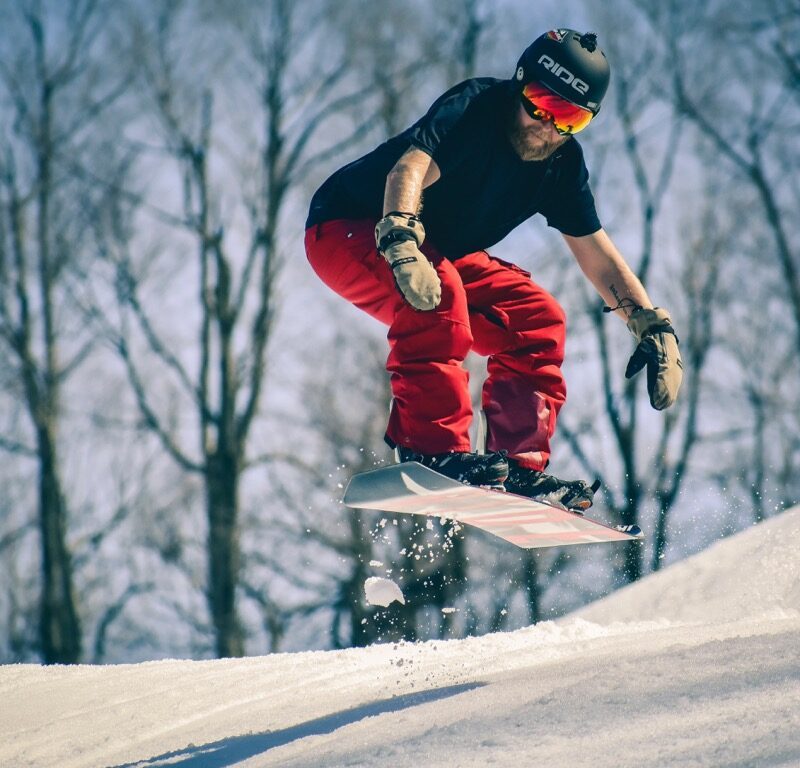
To ski or snowboard? It’s a valid question for outdoor lovers itching to get into a new winter sport. In reality, there’s no wrong answer. They’re similar, of course, but with marked differences. Both skiing and snowboarding deliver the unrivaled rush of carving a path down a mountain slope through a blanket of fresh snow. And, of course, both snow sports offer the chance to fully savor a perfect winter day. But, each one requires a unique set of skills. So there’s no simple answer to the question, is skiing or snowboarding easier?
Most people tend to prefer one sport over the other. Maybe it’s genetic, who knows? You might even be part of that rare breed who enjoys both equally. But, if you’re one of those outdoor lovers trying to decide if you should take up skiing or snowboarding, here’s a quick breakdown of the two sports.
What’s the difference between skiing and snowboarding?
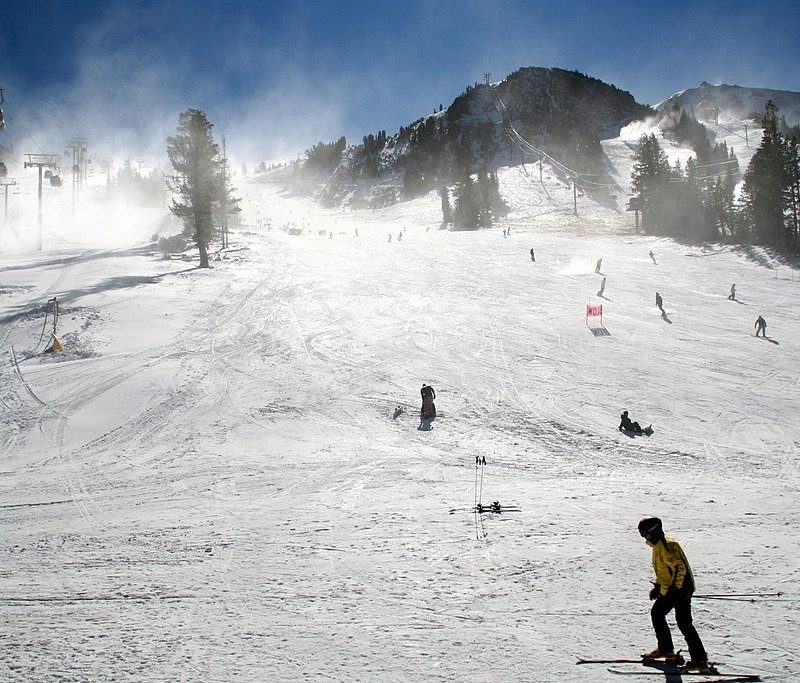
First and foremost, what’s the difference? Both skiing and snowboarding involve gliding down a snowy mountain slope, often at a thrill-inducing speed. But, beyond that, in terms of technique, the two sports employ very different techniques.
The low-down on skiing: A brief history
Skiing involves sliding over the snow on two separate plank-like skis, usually with the aid of poles. Archeological evidence suggests skiing evolved out of necessity — with Paleolithic humans fashioning wooden skis to traverse frozen landscapes. Skiing caught on in Europe and Central Asia — especially in the snowy climes of the Scandinavian Peninsula. Nordic skiing, also called cross-country skiing, gained popularity first, but by the late 1800s, the thrill of alpine skiing was starting to draw a contingent of faithful converts.
Alpine skiing officially premiered at the 1936 Winter Olympics in Garmich-Partenkirchen, Germany. Around the same time, the sport was catching on in the United States too, with the first downhill resorts opening in the early 1900s, beginning with the Howelson Hill Ski Area in Colorado in 1915. But, Sun Valley Resort changed the game in 1936, unveiling the world’s first chairlifts for skiing. And the rest is history.
Understanding the roots of snowboarding (and how it was born)
While skiing likely emerged out of necessity, snowboarding, on the other hand, evolved for the thrill of the ride. Early prototypes of the modern snowboard were developed in 1917, by a kid named Vern Wickland in eastern Minnesota, to cruise a hill in his parent’s yard. Later, a board-like contraption dubbed the Snurfer was invented by Sherman Poppen in northern Michigan in 1965.
But, modern snowboarding took shape in the 1970s, with the founding of archetypal snowboarding brands. First came Winterstick, followed by SIMS, and Burton. But the sport initially had a rough road. Snowboarders had an unruly reputation, and a number of resorts in the United States banned snowboarders during the 1980s. By the 1990s, though, the sport gained more recognition and premiered in the Winter Olympics in 1998. Snowboarding bans were subsequently lifted at the bulk of American ski resorts — and today only remain at Alta Ski Area and Deer Valley Resort in Utah and Mad River Glen in Vermont.
Which one is easier to learn?
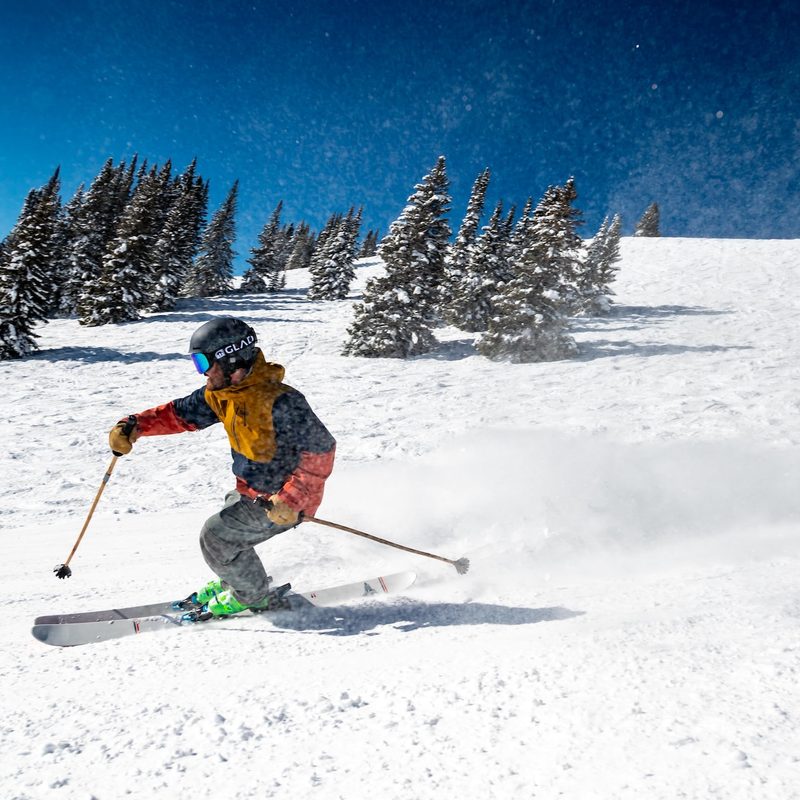
OK, so we did say earlier that there is no easy answer to the question of whether skiing or snowboarding is easier, and that’s true, but there is a consensus that one is easier to learn, while the other is easier to master.
According to outdoor outfitter Mountain Warehouse, many people feel that it’s easier for beginners to pick up the basics of skiing. Snowboarding, while harder to learn, is easier for riders to get to an advanced level.
One of the reasons for this is that the position of skis tends to feel more natural for beginners. Your legs are separated and can move independently while you glide forward down the slope in a position that most of us move in every day. By contrast, when you get on a snowboard, your feet are both attached to the board and you’re facing to the side and have to turn your head to see in front of you, which can be awkward.
However, once a rider picks up the basics of snowboarding, it can be easier to improve quickly, and once again, it’s all about the feet. With your feet locked into a snowboard, it’s easier to master turning since your feet move together. On skis, many people have trouble coordinating the movement of their feet while turning, making it difficult to make those hard cuts on the slope.
So while neither skiing nor snowboarding is easier, there are some things to consider before you hit the slopes.
Gear essentials to get started with skiing and snowboarding
For skiers, essential gear includes skis, boots, bindings, and poles. For beginners renting skis from a resort or local ski shop, your ski bindings will already be connected to your skis, and perfectly sized to fit your boots. Similarly, for snowboarders, the basics include a board, bindings, and boots. And, like ski bindings, when grabbing a rental board from a resort or local outfitter, bindings will already be attached to your snowboard.
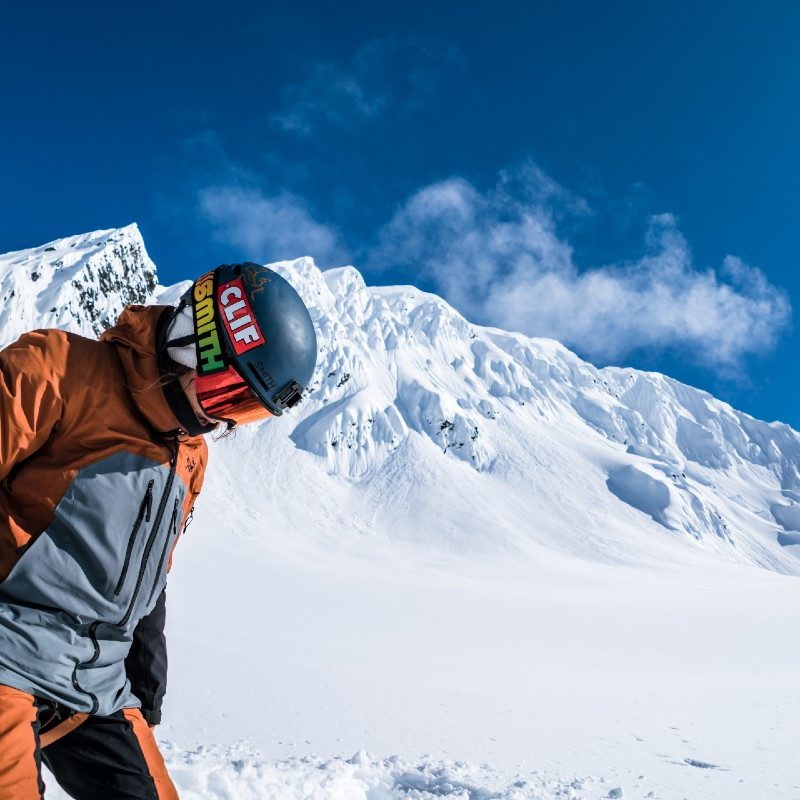
For first-time skiers and snowboarders, falling is a standard part of the learning process, so a ski helmet can provide added protection on the slopes. And, for beginners without their own gear, many ski resorts and local ski shops also offer helmets for rent at a daily rate. It’s also worth picking up a pair of ski goggles to help shield against eye-stinging winds and drifting snowflakes. On clear days, a regular old pair of shades will work in lieu of goggles — ideally, sunglasses with polarized lenses, which will help reduce glare from snowy mountain slopes.
Everything else you need to master skiing or snowboarding
Before hitting the slopes, the first step is choosing the right skis or snowboard, based on a combination of your height and weight, along with your experience level. Don’t sweat it, though, for first-timers renting gear from a resort or local ski shop, experts will be on hand to ensure your skis or snowboard are perfectly sized for your ride. But, there are a few general factors to consider. There are a variety of downhill skis as well as a variety of snowboards available these days, catering to all kinds of riders — from backcountry enthusiasts to skiers and snowboarders who prefer not to leave the groomed slopes of a resort.
As a rule of thumb, for first-time skiers, shorter, thinner skis are easier to handle while still mastering turns. For snowboarders, board length is generally correlated with body weight, with longer boards designed to handle heavier riders. And, with the variety of boards on the market, an all-mountain snowboard is a safe bet for first-time riders getting a taste of different types of mountain terrain.
Clipping in for your first ride on the chairlift
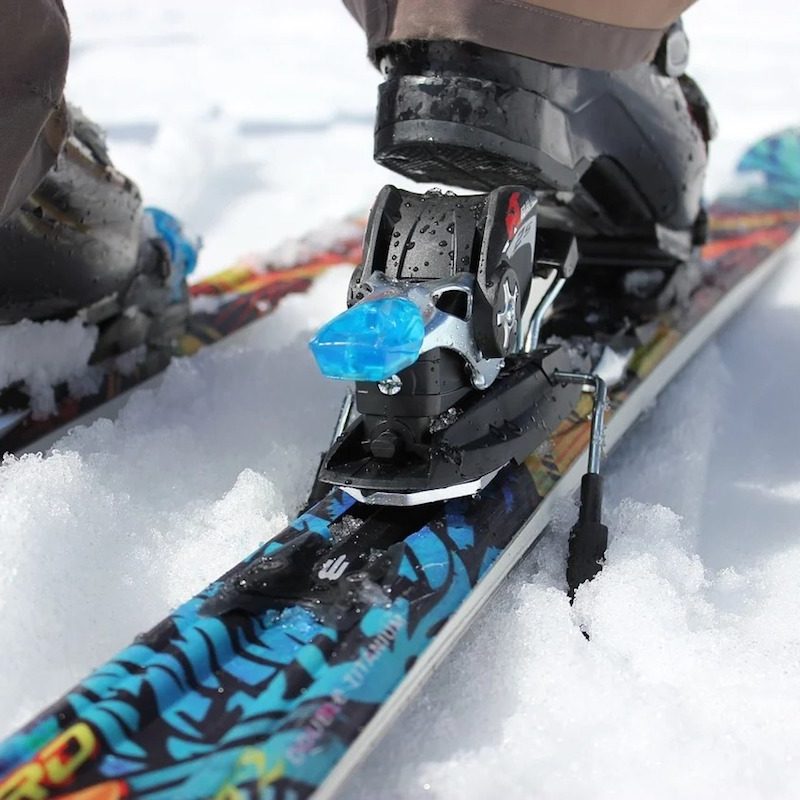
Of course, the first step is simply getting into your skis or snowboard. If you plan to ski, you’ll want to clip into both of your skis before hitting the lift line. Skis typically aren’t tailored to fit your left foot or your right foot. Sometimes rental skis will be labeled as right or left, based on the way the resort or rental shop checks boots and bindings. When getting into your skis, first make sure there isn’t any snow accumulated in your bindings, as this can impact the way your boots fit into your bindings. When clear, begin by positioning the toe of your boot in line with the toe piece on your ski bindings and then push your heel down.
You should hear a definitive click, and see the prong-like metal ski brakes at the back of your bindings pop up, out of the snow. Don’t worry, in the case of fall, as soon as your boots are released from your bindings those brakes will snap back down, to keep your skis from sliding away. If you need to get out of your skis to maneuver, find a flat spot in the snow (so that you won’t slide away), and use one of your ski poles to push down on the indentation on the back of your ski bindings to release your boot.
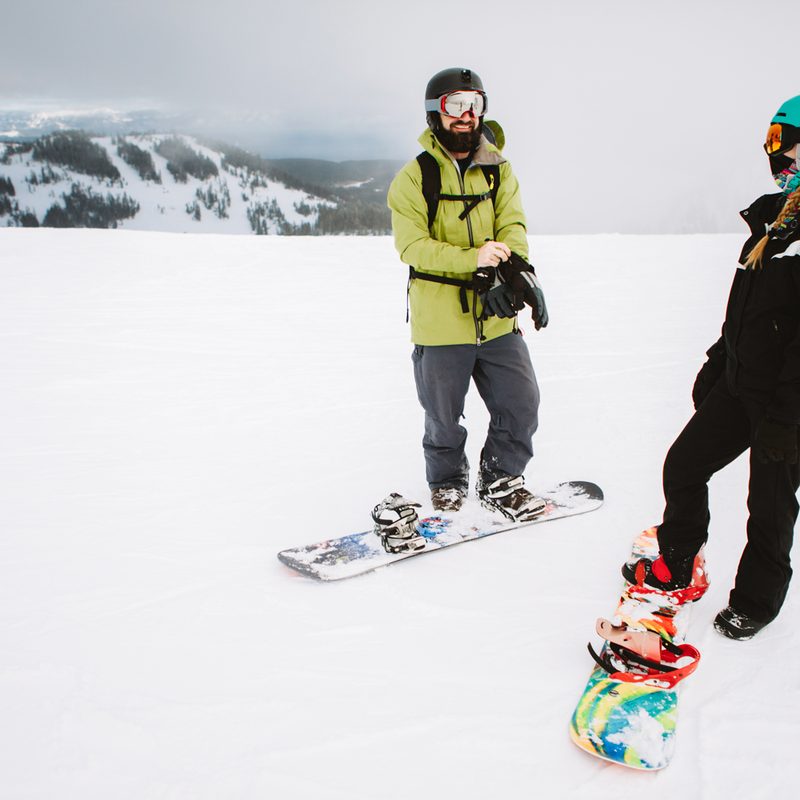
For snowboarders, you’ll need a free foot to navigate the chairlift. Start by strapping one boot into your bindings. Sweep away any snow, and put your foot into the front binding on your board. Make sure your boot fits snugly into your binding. Tighten the ankle strap first, then the toe strap. For now, leave your back foot free while you navigate the lift line, and practice basic skills like skating and gliding.
Understanding the basic techniques of skiing and snowboarding
Ready to hit the slopes? For both skiers and snowboards, it’s all about shifting your weight to carve turns and control your speed. For skiers, step one is learning the art of the snowplow — also commonly called the pizza or the wedge. On a gentle slope, practice making a wedge shape with your skis by pointing your tips together in a triangular shape. Make sure your skis don’t cross, which can cause a tumble. This is called a snowplow, and the motion will slow you down and help you ease into turns.
For snowboarders, start by practicing skating — that is, using your back foot to push yourself along flat ground in the lift queues, while your front foot is still strapped into your front binding. Then, start with gliding on a gentle slope. To begin, keep your back foot free, but rest it on your board without strapping into a binding just yet and just allow yourself to practice gliding downhill.
Many times, the best way to learn the basics of skiing or snowboarding is to rely on the experts and begin with a lesson. And, it’s never too late. Many resorts offer options for adults, from just-the-basics group classes to private lessons to specialized clinics tailored to specific skill sets.
What to wear on the slopes for skiing and snowboarding
Staying comfortable will greatly enhance your experience on the slopes — especially when learning to ski or snowboard. And, since both sports involve spending time outdoors during the winter often in snowy conditions, in most cases the same clothing and outerwear works for both skiing and snowboarding.
Dressing in layers is key to staying comfortable while skiing and snowboarding
The key is to dress in layers to ensure you stay warm but without overheating or sweating too much. Start with tights or long underwear as a base layer, and stick with clothing made from silk, merino wool, or synthetic materials like polyester, which help regulate body temperature better than cotton.
Add a mid-weight layer like a standard fleece jacket or a heavy wool sweater, and then a ski or snowboarding jacket that is waterproof or has a water-resistant shell. For beginners, spending a little time in the snow after a fall is inevitable, so opt for a jacket and ski pants that are waterproof, or at least water-resistant. Jackets with a hood are also handy, especially as an added buffer on windy days. And, don’t forget about your face neck, and head. A scarf, balaclava, or neck-gaiter is key to protect against icy winds and swirling snow. If you plan to use a helmet, it will include liners and ear pads to help keep your head warm, but if not, opt for a well-insulated hat.
A few other essentials to consider
Of course, keeping hands and feet toasty is essential too. Ski gloves or mittens with a waterproof or water-resistant exterior will provide better protection for long days on the slopes. And, if your fingers tend to get frosty, wear a pair of liner gloves too.
Socks are equally important. Just like other base layers, when choosing socks you’ll want to go with a material that will keep your feet warm while wicking sweat. Steer clear of cotton socks and instead look for socks made of merino wool. For skiers or snowboarders apt to hit the slopes more than once, premium socks are worth the investment. Typically, ski and snowboarding socks are longer than standard socks, reaching at or above the knee, and feature strategically placed padding for added cushioning and support for heels, shins, and the tops of feet.
For long days on the slopes, hand warmers can be a lifesaver too. Rechargeable options, like Zippo’s HeatBank 9s, pack as much as nine hours of heat and can be tucked into pockets to help reheat frosty hands. Alternatively, disposable chemical-based hand warmers can be activated in a matter of minutes, and provide heat for up to 10 hours. Plus, the tiny packets are small enough to fit into gloves or boots.
Where to go snowboarding or skiing this year
Whether on skis or a snowboard, the thought of hitting the slopes for the first time can be intimidating. Fortunately, for first-time skiers and snowboarders, some of America’s most renowned resorts are loaded with options for beginners.
In the Southwest, the Alf Engen Ski School at Utah’s Alta Ski Area, one of the oldest ski resorts in the country, offers an entire slate of programs for newbies, including group classes, tailored private lessons, guided tours, skill camps, and progressive multi-week programs.
For newbie snowboarders, Colorado’s renowned Breckenridge Ski Resort offers half and full-day group lessons for adults, along with classes for intermediate and advanced riders to continue the learning curve.
Whatever your level of expertise and whichever sport you’re into — be it skiing, snowboarding, or both — there’s a perfect resort and a class out there to help you get started or master your technique.


