Stop. Right. There. Put down the shot glass. Have a seat and take some notes. Your drinks deserve accurate execution and your kitchen counter is tired of soaking up half of your booze. Let’s get precise with the right cocktail measuring tools, tricks, and terms.
Measuring Tools
Free Pour
Free pouring is the most dramatic way to pour alcohol and is often viewed as the least reliable. The more proficient the bartender, however, the more accurate the pour will be. Free pours operate on a four-count where one, two, three, four corresponds with 0.25 oz, 0.5 oz, 0.75 oz, 1 oz measurements, respectively. Testing the count in 1 oz shot glasses or even a jigger can help set your internal rhythm, but each liquid pours at a different rate. Simple syrup will pour much slower than vodka, and even liquors in the same genre can have different viscosities.
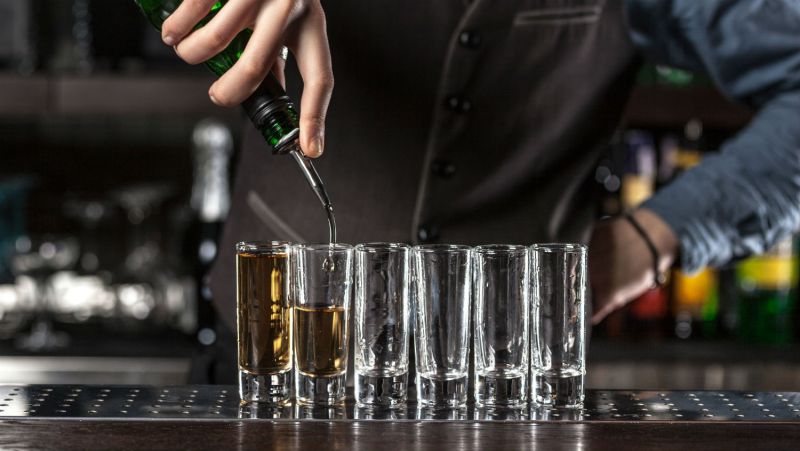
Ultimately, free pouring is a method used at high-volume bars to save time. If you’re interested in the theatrics of this method, despite its immense learning curve, there are bottle spouts you can use to control the flow of each pour.
Double Jigger
You won’t really find any one-sided jiggers anymore, and with good reason. Having different cups with different measuring lines makes for efficient cocktail building, especially when dealing with very small portions. Double jiggers are held by placing the “waist” between your thumb and forefinger or your forefinger and middle finger.
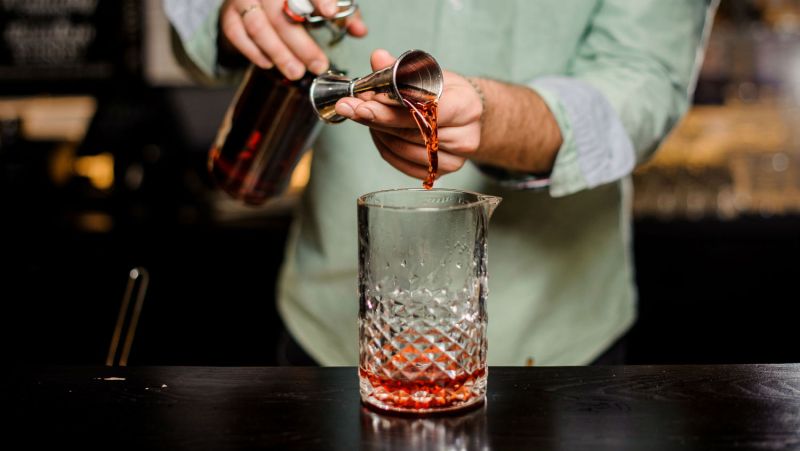
Now that we’re getting into measurement lines, you need to dust off your high school chemistry knowledge. Filling a jigger to a certain line or to the brim will create a meniscus line (curve on the liquid’s surface). You want the meniscus to continue the etching line in your jigger.
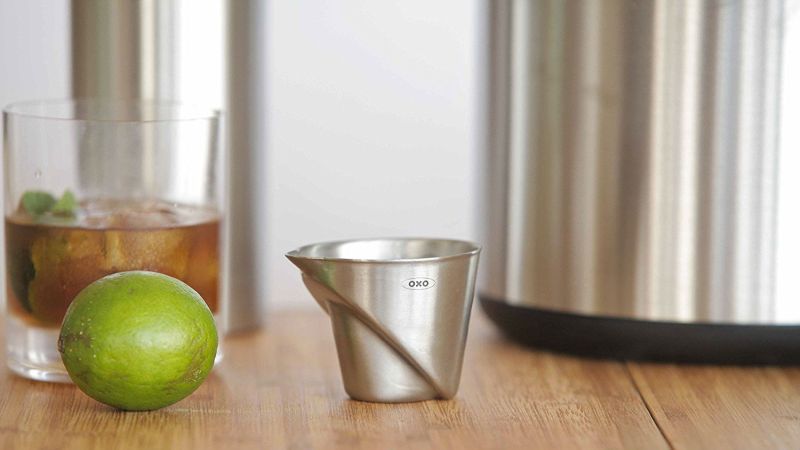
Oxo has the market locked down when it comes to jiggers and measuring cups, thanks in large part to its popular double jigger. One side measures up to 1.5 oz while the other measures up to 1 oz. Other popular jigger ounce ratios include 1:½, 2:1, and 2:½. With a rubber grip in the center, you run a lower risk of spilling your pour or dropping the jigger. If you want something a little sleeker, a Japanese-style jigger always brightens up a bar kit and can be a bit more accurate than more squat jiggers.
Cocktail Beaker
Still have your lab coat on? Cocktail beakers typically hold 3 to 5 oz and are best used for large drinks with few ingredients, like a Manhattan. These beakers can also be used in place of a measuring cup if you’re not testing out extremely complicated cocktail recipes.
Measuring Cup
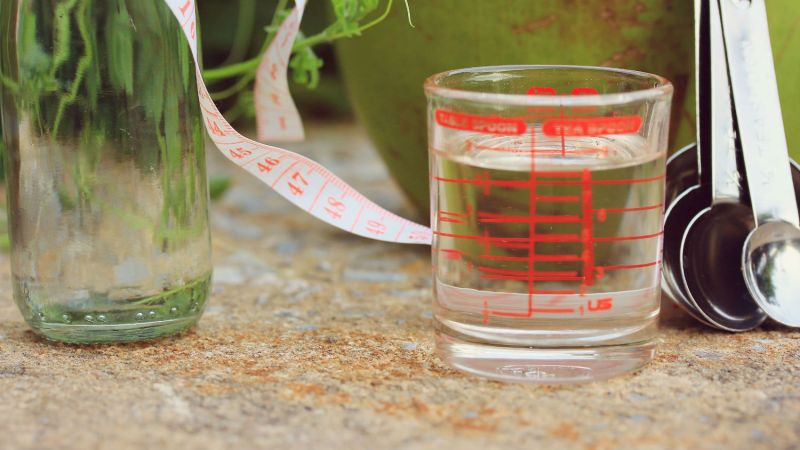
Measuring cups can be handy tools for crafting cocktails if you’re into math (yes, you need to be a huge nerd to make great drinks). Rather than pouring everything individually into a jigger, you can pour each ingredient directly into the measuring cup by subtracting the last total from the result of your most recent pour. Oxo’s angled measuring cups are strong contenders here, with popular plastic and stainless steel models available.
Cocktail Measurement Terms and Their Meanings
Now that you have the tools, here’s a quick guide to measurement terms that might be a little harder to place.
Part: This is not a particular measurement. Rather, it’s based on the volume of your serving size/glass. All the recipe is recording is the ratio of the ingredients to each other. Parts are great for drinks like sangria, where you could be making a glass or a pitcher.
Jigger: Getting its name from the most common large jigger measure, this means 1.5 oz.
Pony: This means 1 oz and references the short nature of American shot glasses, whereas other countries use 1.5 to 2 oz shot glasses.
Float: Floating a liquid in a drink is typically done for a visual effect, especially if you’re layering ingredients with different densities, but it can also be used to impart a small amount of flavor. Use your best judgment here.
Splash: This is a very subjective measurement, but if you follow the counting method from free pouring, a one-half to a one-count would be sufficient here.
Dash: Dashes are most frequently referring to bitters in a cocktail recipe which could be as few as three or as many as six drops.
Stir/roll/shake: Here’s our guide to different mixing techniques.