If you’ve never tried bouldering before, you’re in for a real treat. Bouldering is rock climbing without ropes or harnesses, and it was originally intended for training so that climbers could practice moves at a safe distance (usually less than 20 feet) from the ground. Gradually, it developed into its own sport and even became part of an Olympic event!
Bouldering is so easy to get into, so if you’re looking for a sport that meets you where you’re at, look no further. Here’s everything you need to know about bouldering.
What do you need to start bouldering?
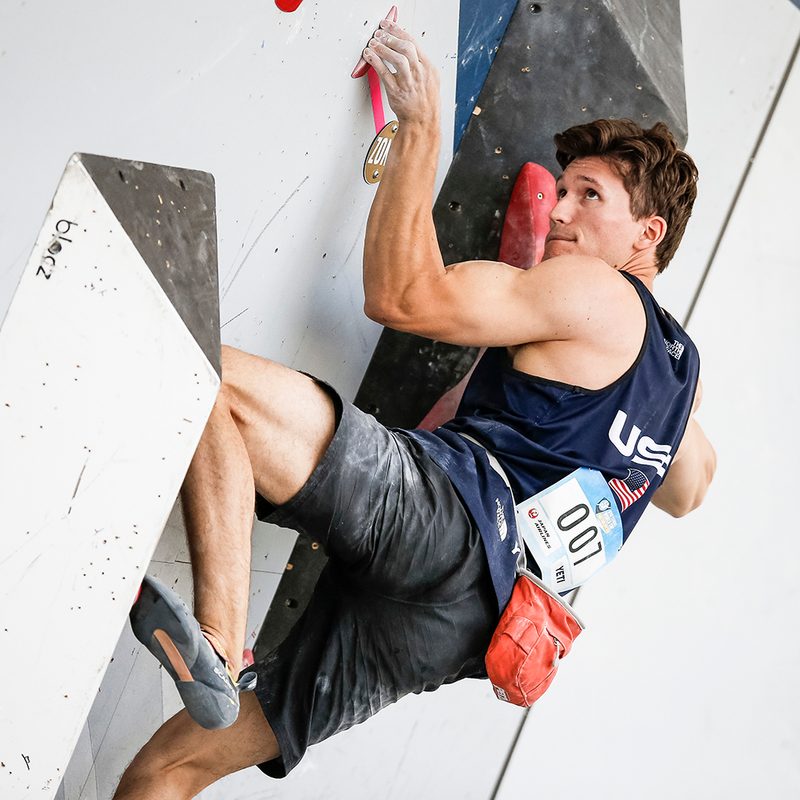
To start bouldering, all you need is a pair of good climbing shoes, which you can buy or rent from your local climbing gym. These should be snug but not painful, and your heels shouldn’t pull out or hook. After buying your first pair, your shoes will stretch slightly with use. Synthetic shoes will stretch less than leather ones. If you’re a beginner and wearing rentals, having thin socks on while you climb can prevent blisters. Oftentimes, more advanced climbers prefer not to wear socks so they can feel what they’re stepping on more easily.
A chalk bag or chalk bucket with climbing chalk is also recommended to keep your and dry so you can grip securely.
“Inside a gym, that’s all you’ll need,” shared expert Tom Adams. “Just throw on your shoes, chalk up your hands, and start climbing — no knots, no belays, and no fuss.” Bouldering is the most accessible form of climbing, and it’s a great way to dip your toe into the world of climbing before you commit.
If you’re bouldering outside, make sure to use crash pads, like they do in the gyms, and bring a buddy who’s experienced with bouldering to help guide your falls. Before you attempt a climb, be sure to practice proper falling techniques so you don’t injure yourself.
How to find your bouldering level
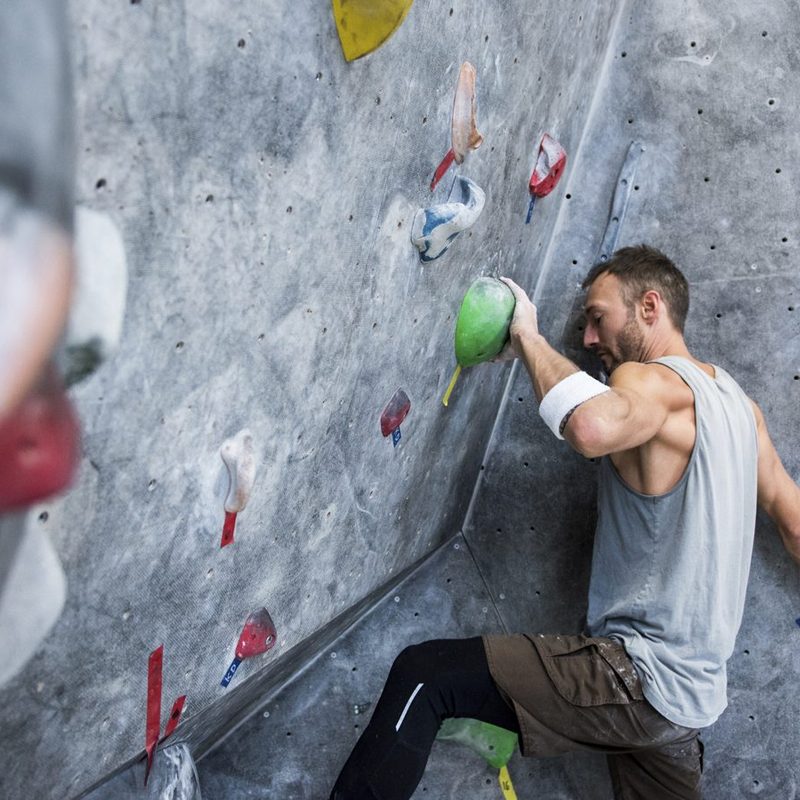
In bouldering, each climbing sequence is called a “problem.” There are two difficulty scales that you might come across: the Hueco system, also known as the “V-Scale,” and the Font Scale.
The V-Scale, so called for the nickname of its developer, famed boulder climber John “Vermin” Sherman, is an open-ended scale. The grading commences at V0 with easy climbs most amateurs could tackle and ascends from there; at present, a rank of V17 is the highest applied, and it marks some of the hardest bouldering problems yet identified. (There is also a grading of VB, in which the B refers to “basic” — these are the easiest rock formations out there).
The Font Scale gets its name from the Fontainebleau region of France, an area where Alpinists used to practice for mountain ascents on the many large boulders. Technically, the Font Scale starts at 1 and goes to 6, with an alphanumerical combination thereafter, which represents difficulty — 6A is easier than 6C, for example. In practice, you will rarely see a Font grade lower than 3. And watch for plus symbols when a problem is just a bit more challenging than a comparable route, but not so much as to be a new number or letter, so 6B+ just under 6C, for example.
It’s always better to start at a lower level and work your way up to something more difficult, so listen to your body and take things slow.
Where to boulder

Today, you can find indoor climbing gyms with bouldering setups in almost every city of decent size, and you can practice the sport anywhere there are decent rock formations. The minimal gear required for bouldering, coupled with the relatively low risk of serious injury, is to remove two of the common barriers to rock climbing. The sport may well serve as a gateway to true mountain climbing for many.
If you’re looking to try your hand at this low-altitude, high-adrenaline sport in one of the finest spots in America, you need to drive about 150 miles south of Salt Lake City to the county seat of Emery County, the town of Castle Dale, Utah. Castle Dale was known for the Hunter Coal Power Plant and not much else. Then came the climbers. Surrounded by hundreds of miles of Bureau of Land Management country, much of which consists of the short cliffs and rock formations perfect for bouldering, the small city of Castle Dale is a boomtown for bouldering.
Popular outdoor bouldering spots are plentiful in the U.S. Some of the finest include:
- Horse Pens 40, Alabama
- Yosemite Valley, California
- Carter Lake, Colorado
- Rocktown, Georgia
- Rumney, New Hampshire
- The Gunks (Shawangunk Ridge), New York
- Hueco Tanks State Park, Texas
- Big Bend Bouldering Area, Utah
- Little Cottonwood Canyon, Utah
- Wind Rivers, Wyoming
How to build your training regimen
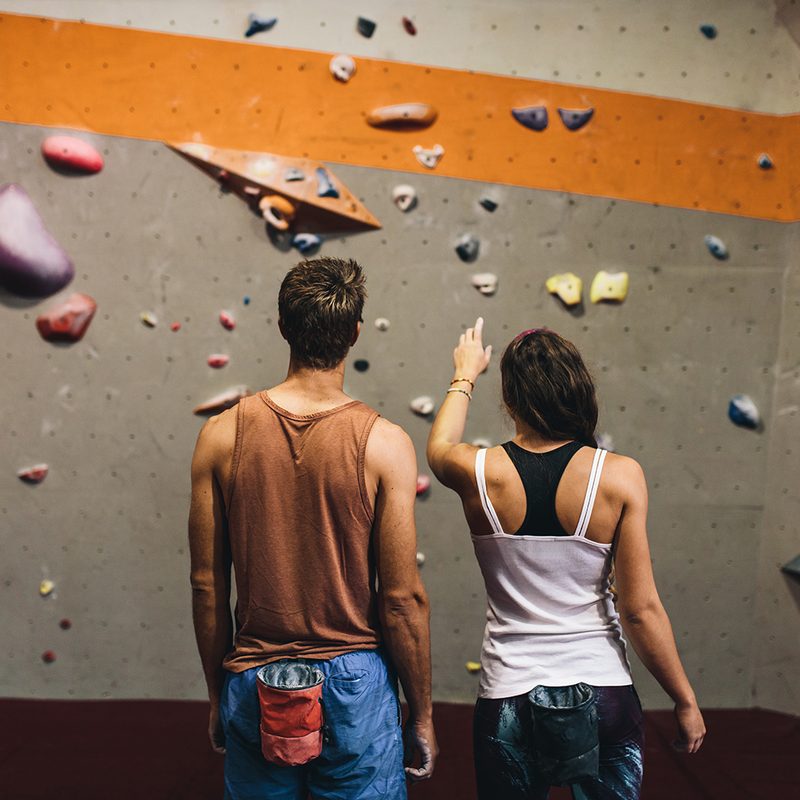
Like any sport, the more you practice, the better you’ll be. Isaac Caldiero, one of the first two Americans to secure a coveted Total Victory in the American Ninja Warrior competition, weighed in.
“Spend as much time as possible out climbing on the rocks with other climbers who have more experience than yourself. After a few months of building a more solid base to avoid injuries, you can then begin more rigorous training in an indoor facility.”
First, establish a weekly schedule. If you want to make a regular habit of bouldering, start with two or three sessions per week. While it might be tempting to do more, your body will need rest days in between sessions to prevent injury. On the days you choose not to boulder, do complimentary cross-training exercises like yoga, core workouts, or cardio.
Once you get into the gym, make sure to warm up thoroughly. Arm circles, leg swings, mobility drills, and wrist stretches will help you perform your best. Start the day with some light climbing, about one or two grades below your maximum to prepare your muscles and work your way up. After your climb, don’t forget to stretch, hydrate, and eat well.