As we move into the colder months, our cravings for hot homemade soups with maybe a grilled cheese on the side grow. But, to make the comforting blend of veggies, seasonings, and stock, you need a tool to blend it all together.
A traditional blender will get the job done, and you could even get by with a food processor if you don’t mind your soup being a little chunky. However, if you are frequently making soups and sauces, there’s one tool that could make your life much easier. You guessed it, the immersion blender.
Better known to some as the hand blender, immersion blenders are an essential kitchen tool for every level of the home chef. Let’s dive into what exactly an immersion blender is and why you might want to equip yourself with one.
Difference Between Immersion Blender and Regular Blender
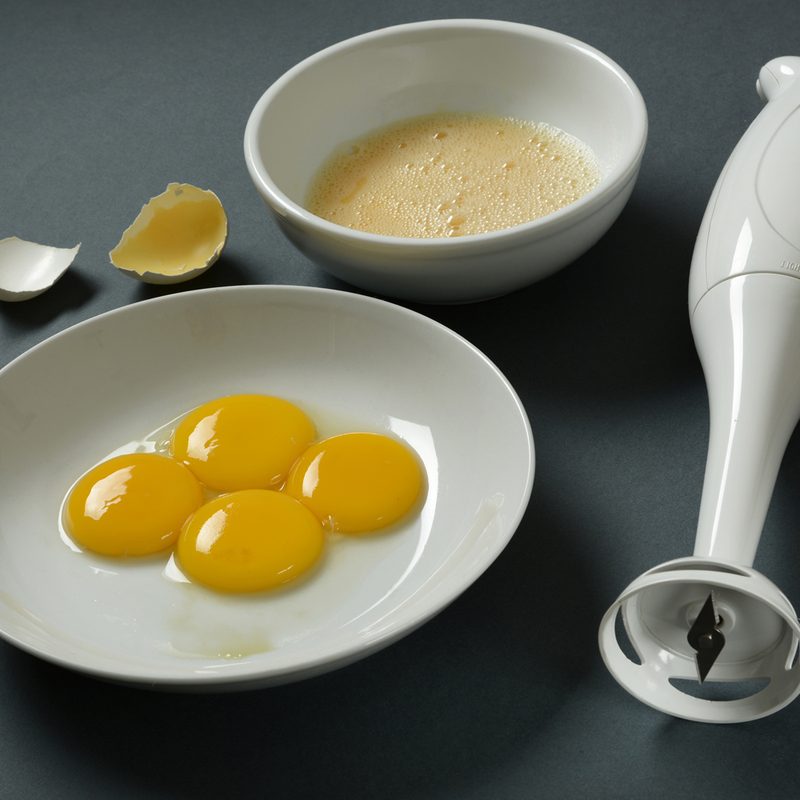
An immersion blender is stick-like in appearance and is held in your hand. There are cordless immersion blenders, while others you have to plug into the wall. Immersion blenders are equipped with a small yet very sharp blade at the end. This blade is surrounded by a metal guard with small holes that let blended food flow through.
As you probably know, regular blenders use a pitcher equipped with a blade at the bottom or throughout the pitcher. They attach to a housing with a motor that plugs in and controls the blade rotation speed.
Advantages and Disadvantages of an Immersion Blender
 Advantages
There are three primary advantages of an immersion blender. First is the ability to cut down on clean-up and blending time. Hand blenders let you combine ingredients right in the cooking vessel. This means no bulky pitcher with finger-slicing blades to have to clean. It also means that you don’t have to blend in batches if you’re making many portions of soup, salsa, or whatever—which could also involve another dish to wash. Immersion blenders are super easy to clean and can really cut down on prep time.
The next advantage to an immersion blender is its small footprint in the kitchen. Most immersion blenders don’t take up much space to easily be stored in a drawer, as opposed to a regular blender that demands space.
The last advantage of an immersion blender is its price point. Although some models are pricey, you can purchase an excellent immersion blender for the same price as a mediocre standard blender. For home kitchens, the most expensive immersion blender models go for around $150. Conversely, a high-end blender can cost anywhere between $350 to $800, or even more depending on the features.
Disadvantages
There are two main disadvantages of an immersion blender. The first is the lack of power and functionality. Since standard blender motors are larger, they are naturally more powerful. Even your basic, low-end blender will likely have more power than the best immersion blender. Less power means a bit more time spent blending by hand; however, that could be a matter of seconds.
Also, hand blenders don’t have all the bells and whistles some standard blenders do in terms of functions. Immersion blenders can have between two to several speed settings, but you don’t have fancy presets like puree, blend, crush, etc.
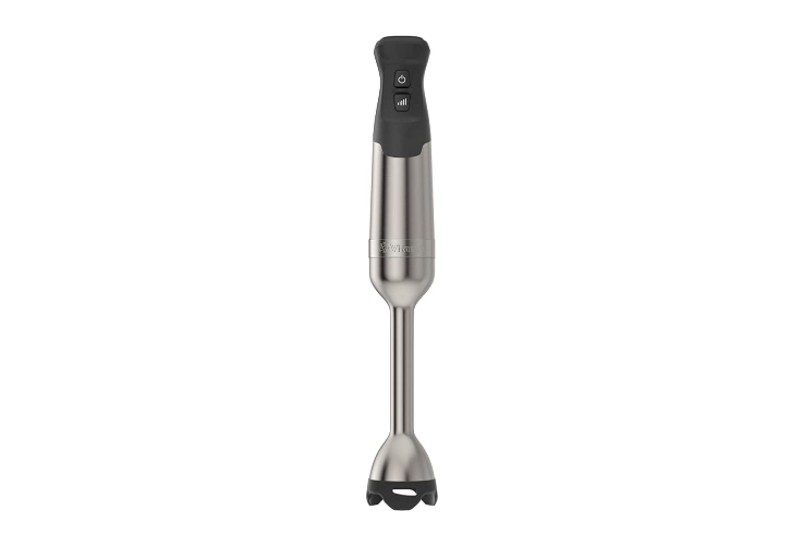
Another downside of an immersion blender, which is often overlooked, is the metal casing around the blade. This feature is primarily a safety feature intended to protect you and the vessel you’re blending in. However, many immersion blenders don’t have a plastic protective coating around the casing. This means if you’re blending in a nonstick pot, it can still do a number on the nonstick coating and ruin it.
If you plan to do a lot of blending in nonstick cookware, be sure to get an immersion blender like the one pictured below. Otherwise, you should transfer your ingredients into a stainless steel or ceramic container before blending.
Different Uses for An Immersion Blender
Immersion blenders are more versatile than you might think. You can blend up much more than soup in a pot. Simply by using different sized vessels, you can make many other concoctions with your hand blender. Also, many come with attachments such as frothers and whisks that are great for foaming up milk for your coffee or beating eggs. Some brands offer even more attachment options that let you go so far as to perform food processing functions.
Here are some everyday things you can make with an immersion blender without any attachments.
- Soup
- Stock
- Salsa
- Smoothies
- Milkshakes
- Batters
- Sauces (hand blenders are great for a quick and easy Hollandaise sauce)
- Blending cocktails
- Beating eggs
- Compounding butter
Why You Should Buy an Immersion Blender
In our opinion, an immersion blender is a small kitchen investment that provides a ton of convenience. Immersion blenders shouldn’t necessarily be a substitute for your standard blender. Certain situations demand the power and functionality of an old-fashioned blender. But, if you’re like us, you’ll find yourself reaching for your immersion blender much more often.