At first glance, Korean kimbap resembles Japanese sushi — both items feature rice and filling, all wrapped in dried seaweed. But make no mistake, these Korean rice rolls are very different than sushi. Kimbap is extremely popular in Korea and a common sight in both restaurants and home kitchens. Unlike Japanese sushi, raw fish isn’t a component of kimbap. Instead, kimbap ingredients generally consist of meat, eggs, and vegetables, ranging from Korean BBQ beef bulgogi to pickled and fresh vegetables.
Veggie Kimbap Recipe
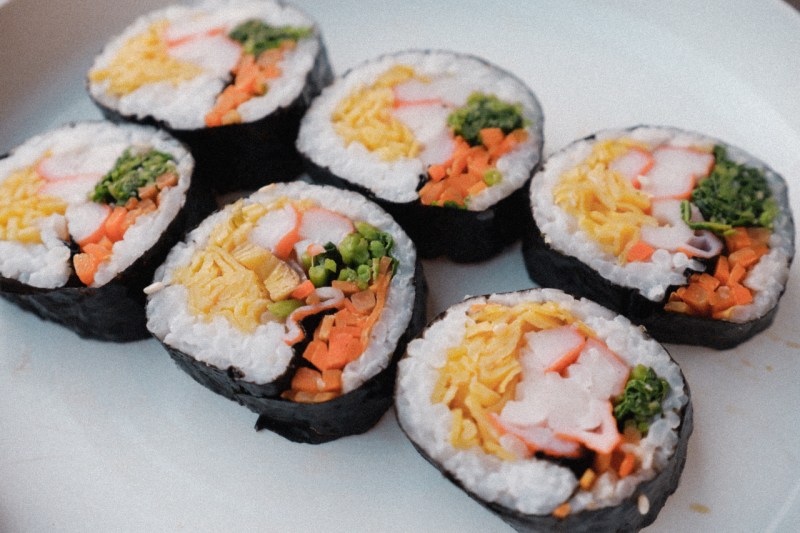
(By Bobby Yoon, owner of Yoon Haeundae Galbi in New York City)
Yoon Haeundae Galbi is a contemporary recreation of owner Bobby Yoon’s grandfather’s legendary restaurant in Busan, Korea. Yoon’s goal is to bring authentic Korean flavors to New York City. The specialty at Yoon Haeundae Galbi is the beef short ribs prepared through the Haeundae Cut, a special technique invented by Bobby’s grandfather to tenderize even the toughest cuts.
This kimbap recipe is delicious as a snack or a meal. Remember, customizing kimbap is part of the dish’s appeal. Besides, the listed ingredients, you can add American cheese, canned tuna with mayo, or even ham for added protein and extra flavor.
Ingredients:
- 2 pages seaweed
- 1 cup white rice
- 3 tbsp sesame oil
- 3 tbsp sesame seeds
- 3 tbsp minced garlic
- 2 tbsp salt
- 1 bunch spinach
- 1 carrot, julienned
- 1 egg
- 1 pickled burdock root (purchased at local Asian mart)
- 1 pickled radish (purchased at local Asian mart)
Method:
- Prepare rice in a rice cooker.
- Julienne cut the carrot, add to a saucepan and stir fry carrots in sesame oil. Add a pinch of salt while stirring.
- Blanch the spinach in boiling water for 20 seconds and wash in cold water. Drain and add one tablespoon of minced garlic, pinch of salt, and one tablespoon of sesame seeds and mix.
- Break the egg and mix with one pinch of salt in a bowl. Over low heat, slowly cook the egg in sesame oil and slice thinly once cooked.
- Put cooked rice into a large bowl and mix with one tablespoon of sesame oil and one tablespoon of sesame seeds, and a pinch of salt and mix well.
- Using a kimbap roller, lay out seaweed and spread a thin layer of rice over top of the seaweed. Then line all ingredients over the rice.
- Slowly roll from the bottom, ensuring the seaweed does not tear. As a glue, use sesame oil on the outside of the seaweed, then cut the roll in one-inch slices. Enjoy!
Kimbap vs Sushi?
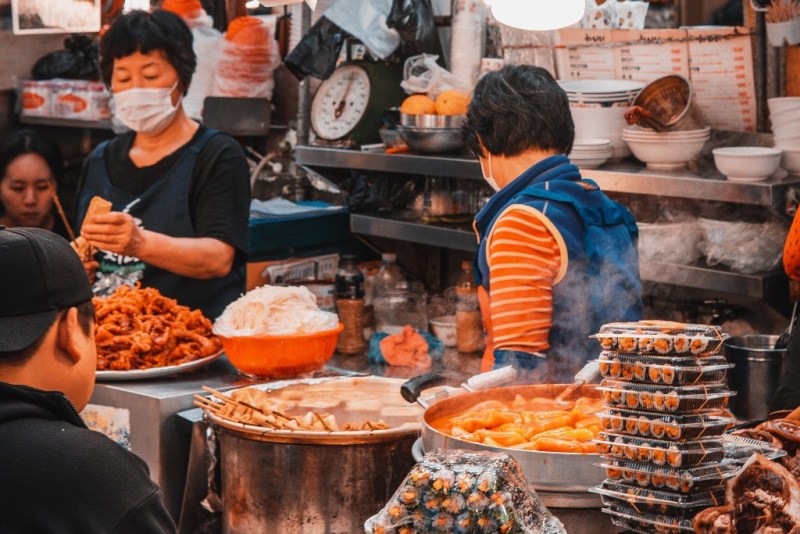
Although affordable sushi exists in Japan, the price point of sushi is generally on the higher end. In comparison, Korean kimbap is an affordable fast food purchased at street vendors, convenience stores, or bus stations. There’s also a big seasoning and ingredient difference between the two dishes. Sushi rice is seasoned with rice vinegar, giving the rice a slightly tart and sweet flavor. Kimbap rice is seasoned with sesame oil. The filling ingredients also differ. Sushi is made primarily with raw fish and shellfish. In comparison, kimbap is made from a wide range of vegetables, meat, and even cheese (American cheese is a popular addition). The seafood used in kimbap is also not raw (for example, canned tuna and imitation crab are common). Finally, it’s also common to eat kimbap whole (without slicing the roll into sections), which is uncommon for sushi.
Despite the existence of Japanese sushi across centuries, there’s some contention among historians on which rice roll came first. Japanese sushi wasn’t always considered a higher-end food. Originally, sushi was a street food, created during the Edo period (1603-1868) as a way to preserve fresh fish. This style, called Edo-mae sushi, has evolved to become the sushi standard. But rolled sushi (norimaki), the kind that resembles kimbap, was not invented in Japan until after 1716 according to historical texts. In Korean cuisine, references to rice wrapped with cooked seaweed has been in historical texts since the 15th century.