Restaurants are some of the most adaptable animals on the planet. When conditions shift, whether it be a lesser economy or a pandemic, they go chameleon. America’s best restaurants simply have to; it’s a means of survival.
Adaptability is very much on the current list of restaurant trends. Rising costs — both in terms of products and rent — are making things incredibly challenging for the industry at large. Couple that with trade wars and an uncertain future, and you’ve got a recipe for, well, significant pivots.
A recent report suggests that nearly half of independent restaurant owners are struggling to make rent. That’s a staggering figure that’s got many putting on their thinking caps and tying out new approaches. Among them, forward-thinking outfits are embracing the multi-use approach.
Within the Denver food scene, some of these inventive adaptations spell cool new opportunities for diners. Odell’s Bagel is helping to lead the charge. By day, the place is a bustling breakfast stop. By select nights, it’s a Japanese chef’s counter. The two-faced approach adds intrigue, sure, but it also allows for less food waste. That leftover salmon skin from lox in the morning becomes a crisp amuse bouche. Root veggies can slow-cook in the bagel oven overnight. Leftover bagel seasoning is used to make miso.
Insights from Chef Miles of Odell’s Bagel
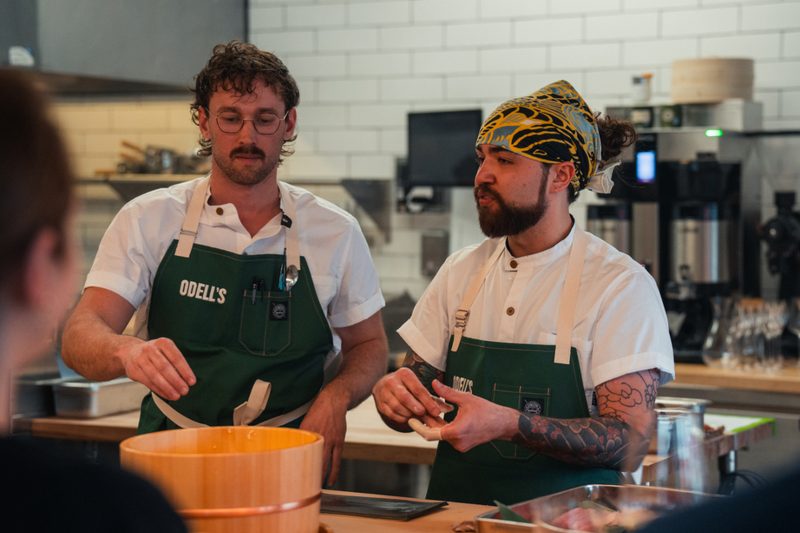
“There are always growing pains with changes like this, but that’s to be expected,” said Chef Miles Odell. “We’ve worked to make the AM-to-PM staff transition as seamless as possible while balancing prep schedules and workload.”
He added that the benefits have outweighed the challenges. “Launching The Counter at Odell’s pushed us to tighten our organization across the board and gave us a valuable opportunity to reevaluate every aspect of our operations with fresh eyes. It allowed us to have a solid team culture and staff training system in place when we hired the PM team.”
It doesn’t work for all venues, but Odell’s has the makeup for it, the ability to shift pretty comfortably. “We can thank the moody, pooled lighting that was a huge part of the design from the start, the intimate nature of the chef’s counter, and the charming location on a prominent corner of the West Highlands neighborhood,” he said.
Sustainability is another big reason for the approach, not just in terms of Odell’s remaining Odell’s, but environmentally, too. “From day to night, ingredients are repurposed and upcycled in imaginative ways with waste reduction at the helm of every decision,” Odell added.
Insights from Atomic Cowboy founder Drew Shader
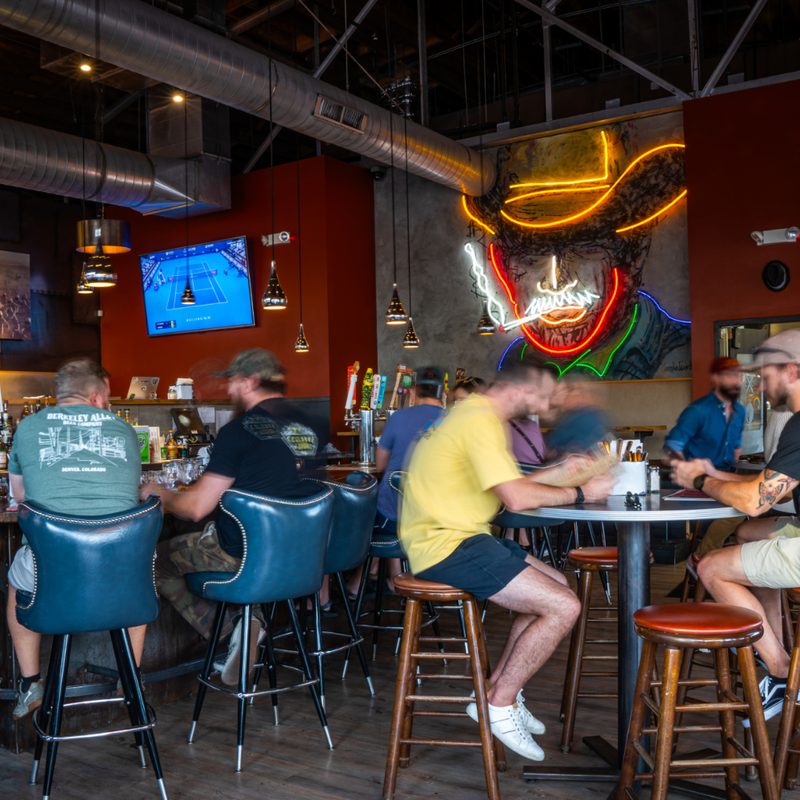
Across town, Atomic Cowboy runs three operations at once. Denver Biscuit Co. during the day, Fat Sully’s Pizza in the evening, and then there’s the Atomic Cowboy bar. “Running multiple concepts in one space definitely brings its own set of complexities — from customer education to maintaining distinct brand identities,” admitted Atomic Cowboy founder Drew Shader. “Communication is key to making sure everything runs smoothly.
It’s a balancing act, but the payoff is offering something for everyone, from breakfast biscuit sandwiches to late-night New York-style slices.”
The response has been very positive. “It’s truly an all-day concept,” added Shader. “Most folks get it right away: We’ve been creating and curing hangovers since 2004.”
He said it’s all about efficiency. “The menu is designed to flow naturally throughout the day, from biscuit sandwiches in the morning to Fat Sully’s slices at night, with smart overlap in ingredients and prep,” he explained. “That shared backbone not only cuts down on waste but also helps us run a leaner, more sustainable kitchen. It’s a model that lets us stay flexible, cost-effective, and open for the long haul.”
Insights from Sushi by Scratch COO Gavin Humes
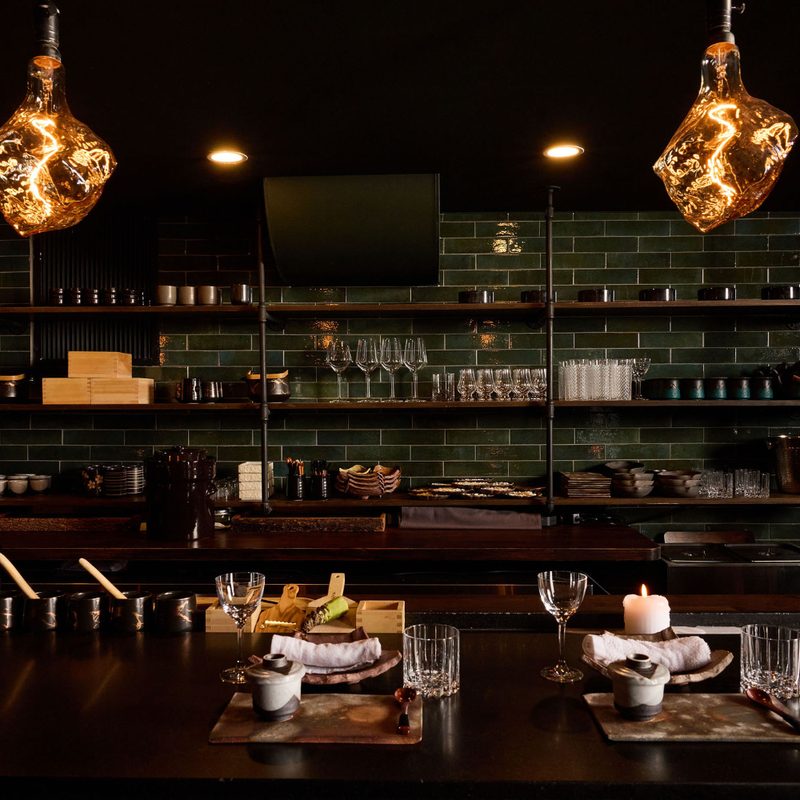
Sushi by Scratch is another restaurant engaged in the juggling act. Up top is NADC Burger. Down the stairs is a speakeasy-style omakase bar. The two eateries launched within weeks of each other and required some serious coordination. Now, it’s a well-oiled machine.
“Some guests visit each concept without realizing they’re connected, while others have that lightbulb moment and it’s a cool surprise,” said Sushi by Scratch COO Gavin Humes. “There are clear sustainability benefits in this model. In Denver, both concepts operate under one roof and share a single address, which allows us to streamline operations — from utilities to permitting. For example, using one liquor license for both restaurants cuts the red tape in half and significantly reduces administrative overhead.”
The dual concept has proven so attractive that it’s spreading. “In this industry, adaptability is everything,” said Humes. “A great example is in Seattle, where we recently introduced our Whisky Bar concept. It transforms the sushi bar lounge into a late-night speakeasy experience every Friday and Saturday from 9:30 p.m. to midnight, offering exclusive handrolls and an expanded cocktail menu. It’s a smart way to activate a previously unused space and offer guests a new way to enjoy the brand, no reservations required.”
Closing thoughts
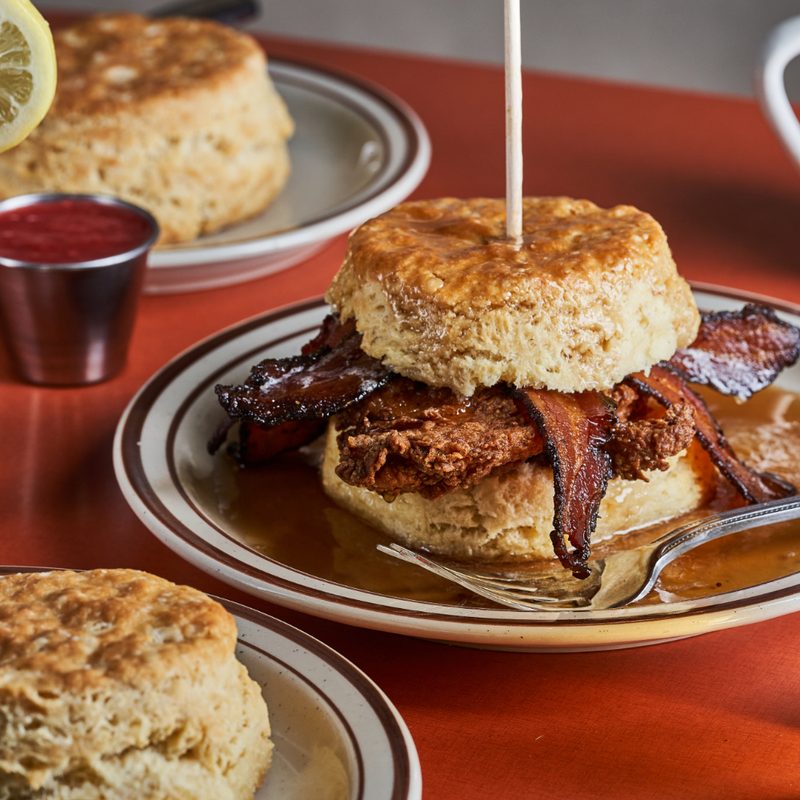
In the end, restaurants hang on and diners are rewarded with cool concepts and a plethora of cuisines, sometimes spanning all three meals. It’s a lot of work, but that’s something the culinary realm is more than familiar with. Restaurant trends change pretty often, but adaptability is proving to be a recurring one.
“We’ve learned that flexibility and consistency can absolutely coexist — it just takes intention,” Shader concluded. “As we grow, we’re always looking at how we can streamline operations, improve guest flow, and bring fresh ideas to the Atomic Cowboy team. The concept itself is built to evolve, and that’s what keeps it exciting.”
Check out some of The Manual’s related content. We’ve got features on everything from retaining Michelin stars to the Providence food scene. Here’s to good eating.