1. Home
  2. Auto
  3. Features

Take a Trip Through History in the Superformance Ford GT40 Recreation

The story of the Ford GT40 warrants far more than a few words, but I’ll use its history simply as context here.

The GT40 Mk I was built in an effort to trump Ferrari, who had been occupying podium positions at the 24 Hours of Le Mans for several years by the early 1960s. Sadly, each of the Lola Mk6-based vehicles constructed in 1964 failed to finish that year’s 24-hour race. It was then that Ford’s Le Mans team was handed over to Carroll Shelby. Under the guidance of the legendary driver and autophile, the GT40 Mk II was built with a 7.0-liter 427 cubic-inch V8, improved dynamics, and a whole lot of attitude. The cars went on to secure Ford’s first 1-2-3 finish at the 1966 Le Mans race and cement their places in motorsport history. Ford continued its domination at Le Mans in 1967, ’68, and ’69 with updated versions of the GT40.

Recommended Videos

Though Ford created seven Ford GT40 Mk III production cars, it was only in 2005 that the automaker introduced a more widely available model: the Ford GT. For this reason, road-going recreations of the Ford GT40 hold special places in the hearts of automotive enthusiasts. And among the specialty shops that take on the task of GT40 continuations, no one does it better than Superformance.

Considering the Ford GT/40 is one of my all-time favorite vehicles, getting the chance to drive a recreation is a dream come true. The Mk II body and components are engineered to the original car’s exact specifications, meaning two-thirds of the parts could be swapped with the 1966 car, including the chassis. This particular car has been provided by Hillbank Motorsports, a distributor of Superformance vehicles, and is owned and driven by the CEO’s son. Though its black and gold exterior is showroom quality, this example has spent far more time on racetracks across the U.S. than suburban streets.

Superformance is commissioned to build rolling chassis (without engines), but the finished cars are commonly equipped with small and big block V8’s. The car I would be driving uses a 427 cubic-inch Roush V8 like the race car, but has been retuned to produce 550 horsepower and 525 pound-feet of torque. Mind you, the classic four-speed manual transmission remains, which translates to some very tall gearing. To handle all that power, Superformance uses Bilstein coilovers with H&R Springs, a fully independent front and rear suspension, and a Wilwood big brake kit. Best of all, the vehicle weighs just 2,200 pounds.

Miles Branman
Miles Branman doesn't need sustenance; he needs cars. While the gearhead gene wasn't strong in his own family, Miles…
Is the BMW XM a perfect blend of practicality and performance
What it lacks in handling, it makes up for in comfort and practicality
Car, Transportation, Vehicle

The BMW XM has received a bit of a mixed response, but there’s a strong argument that it’s a logical next step on from the BMW M5. Think about it, the M5 is special because it combines practicality with exceptional performance. The BMW XM does the same thing, though you’re trading a little handling quality for far more practicality.

On a recent venture in BMW’s performance SUV, I weighed up the pros and cons of BMW’s most divisive vehicle. And it may be a better choice than BMW’s flagship.

Read more
Is the Mercedes-AMG GT 63 the best sports coupe on the market?
It's fast, good looking, and the sound of its V8 will send shivers down your spine.
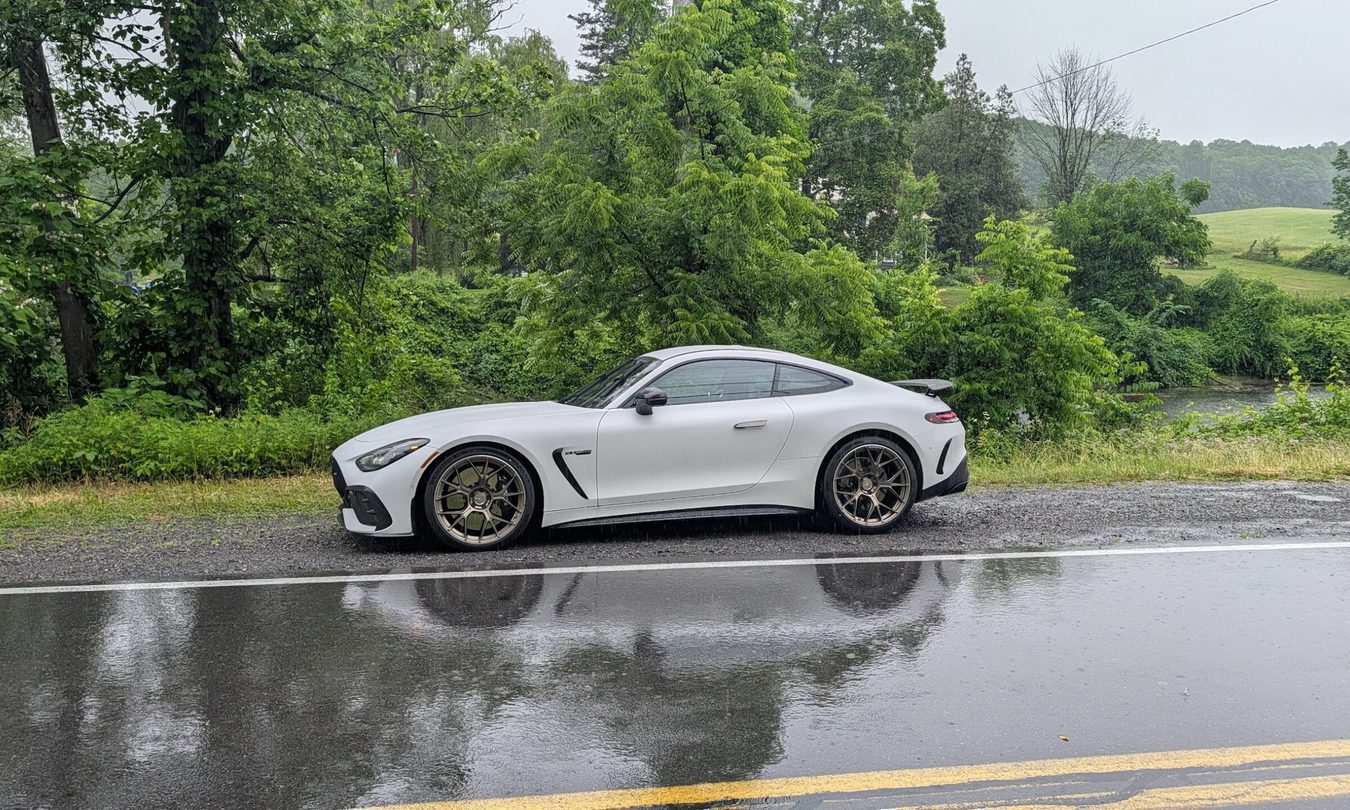
Side view of a Mercedes-AMG GT 63

When it comes to entertaining vehicles, it’s hard to beat a good sports coupe. And, despite it being a competitive segment, there’s an argument that the Mercedes-AMG deserves a spot close to the top of the sports coupe table.

In terms of direct rivals, the AMG sits in a similar bracket to the Porsche 911, Maserati Granturismo, and the BMW M8 Competition. All of which offer a lot of power, excellent handling, and an eye catching exterior.

Read more
McLaren and Motul develop bespoke lubricant to keep them on top
Motul uses McLaren Racing to test the limits of their formulas
Auto Racing, Car, Formula One

My first vehicle was a 1988 Ford Ranger. It was small, reliable, and the perfect first car. However, I wasn't allowed to park it in the driveway at home because it went through as much oil as it did gas. The leak was bad enough that I had to check and refill the oil once a week. The same cadence as the gas tank. That was where I learned the importance of fluids for cars. McLaren hits the Formula 1 tracks across the globe with that importance at the forefront of mind as they compete for the championship, and will now be teaming with Motul to take their collaboration for the world's most reliable lubricant to the world of endurance racing. From the high stress of speed in Formula 1 to the endurance of long-distance racing, the perfect bespoke lubricant is on the way.

McLaren was already using a very high-performance transmission fluid, with an extremely high level of requirements. Our challenge was to go even further: decrease friction losses even more while ensuring lubricant durability over time. The formulation developed with McLaren Racing has been validated to maintain its performance over several thousand kilometers under Formula 1 conditions. And this is only the beginning: in F1, cars are constantly evolving, and the formulation will continue to progress as well. - Julien Plet, Head of R&D at Motul.

Read more