I’ve had a lifelong fascination with penguins — and to no surprise, I’m not the only one obsessed with these adorable and fascinating creatures. James Ward, wildlife photographer and co-founder and Chief Exploration Officer at Rewild Safaris, has traveled extensively photographing penguins in the wild in many locations — from Chile to South Africa to Australia.
After his initial encounter with penguins in the wild in South Africa, his excitement and awe quickly shifted to concern, inspiring him to commit to telling their stories and helping to protect them. Below, Ward shares what makes meeting penguins in their natural habitat so intimate.
Encountering penguins for the first time

“The first time I saw penguins in the wild was in Cape Town, South Africa, at Boulders Beach. It was of African penguins that a friend had told me about, and you had to take a little-known path to a secluded beach to spot them. Only the locals really knew about the location, but once you got there, you could walk freely among the animals and even swim with them if they were in the mood,” says Ward.
“What struck me most about that first encounter was the stark contrast between what I was experiencing and the image in my head of penguins my entire life up to that point. Penguins are synonymous with ice and wind and the chill of Antarctica, but here they were in a far warmer climate. Watching them glide through the water and waddle across the sand was mesmerizing, and I felt something deep within me awaken.”
“My initial excitement shifted to awe as I saw the playful penguins swimming alongside my family and me, but it was interrupted by a sobering sense of concern. I knew exactly how endangered these animals were and immediately began thinking of what I could do to protect them,” Ward says.
This moment was a turning point for Ward, where he realized this first encounter was the start of a lifelong journey to tell the stories of penguins through photography and ecotourism.
Behind the lens

“As a photographer, it challenges me to not just capture cute photos of quirky animals, but to tell their entire story of resilience, vulnerability, and ultimately the rhythm of their lives in extreme habitats. It’s not just about getting the shot, but showcasing how incredible these animals are why protecting their homes is vital,” says Ward. “It’s easy to say that you believe an animal should be protected, but it’s a different story once you’ve stood among them. You immediately understand what is at stake, and it sticks with you on a much deeper and more fundamental level.”
After spending hours behind the lens photographing King penguins on a remote beach in Tierra del Fuego and Magellanic penguins in Peninsula Valdés, Ward remains inspired and fascinated by these birds.
“I quickly learned that the location is everything, especially when you’re planning your journey. Weather dictates the gear you bring, but it can change on a whim, and toting an entire bag of heavy lenses with you isn’t an option. All the preparation in the world won’t prepare you for a spontaneous storm, but if you take all the information you have and commit to a decision, you’ll be right more often than not.”
What makes meeting penguins so unique
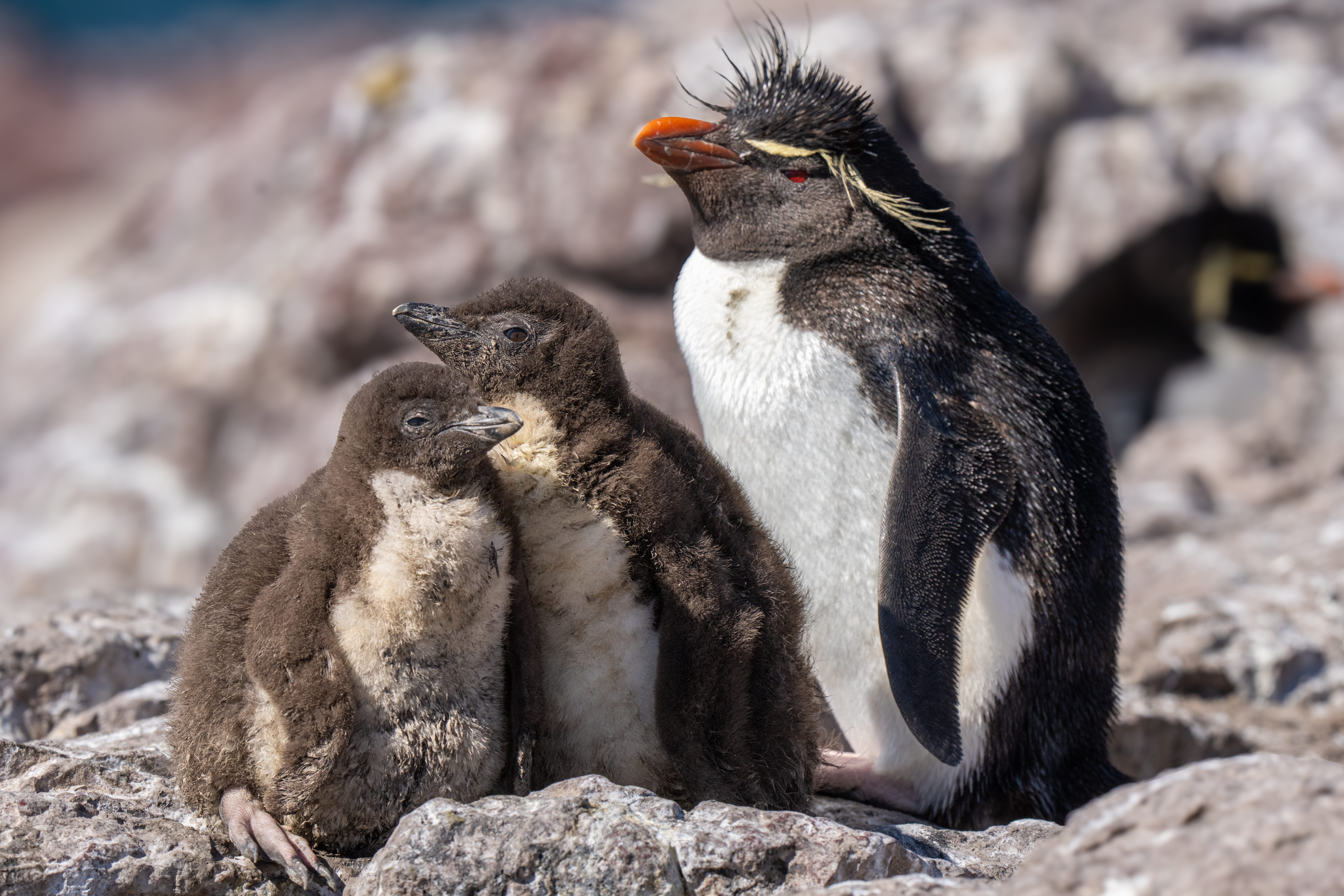
“Many animals don’t allow you to get close while on safari, but penguins are different. In many destinations, you can walk among hundreds or even thousands of birds, and you can take raw, unfiltered photos from just feet away, rather than a hundred yards. It’s a truly natural connection, and it reinforces why protecting these fragile ecosystems is so very important,” Ward says.
For travelers set on finding their own penguin encounters, Ward recommends starting by determining what species you’d like to see and what you want the experience to look and feel like.
“Warm weather or cold weather, windswept outcrops or quiet beaches, it’s these decisions that will determine both your destination and your apparel,” he shares. “The reward is a connection with an animal that is unlike the version you have in your mind. I always connected penguins with ice and snow, but African penguins thrive on warm, sandy beaches, and Humboldt penguins reside on dry, arid coastlines. They are a remarkably adaptable group of animals, and their behavior is truly fascinating. Everything from their social interactions to their vocalizations is full of personality.”