1. Home
  2. Culture
  3. News

SoundCast’s VG7 omnidirectional speaker is designed to sound as good outdoors as it does indoors

After an extended period of relative inactivity, SoundCast released its VG1 Bluetooth speaker late last year, combining quality sound with a relatively low price. Now that speaker is getting a more high-end companion in the VG7 omnidirectional Bluetooth speaker.

“We designed the VG1 and VG7 as a direct response to the market’s demand for high-definition Bluetooth speakers designed for optimal sound quality no matter the performance setting,” SoundCast President and CEO Oscar Ciornei said in a statement. “We studied the market extensively and have moved forward with our partner’s and consumer’s desire to continue to produce products that offer studio-type sound in the outdoors. The VGX Series embodies the notion that there shouldn’t be a need to sacrifice really rich audio for a rugged, weather-resistant enclosure.”

Recommended Videos

Like the VG1, the VG7 is built to be weather-resistant and tough, with a shock-absorbing exterior that should keep it safe during the occasional accidental drop. Where this speaker differs from the VG1 is that inside, it has much more going on in the way of sound quality and technology.

The VG7 packs a downward-firing 7-inch subwoofer for substantial bass, which is complemented by a total of four 4-inch drivers for the midrange and high end. These speakers, combined with the 360-degree audio provided by the speaker’s shape, should make filling a room with sound an easy task, but the speaker is also capable of providing the soundtrack for a backyard party. If you’re looking for even bigger sound, SoundCast’s Auto Bluetooth feature makes pairing two VG7 units a simple process.

The SoundCast VG7 sells for $700, and is expected to become available in the spring of 2017. If you’re looking for something more affordable, its cousin in the VGX series, the VG1, is available for $150, and is currently available from Amazon.

A version of this article originally appeared at our “brother site,” Digital Trends.

Kris Wouk is a tech writer, gadget reviewer, blogger, and whatever it’s called when someone makes videos for the web. In his… Read Full Bio
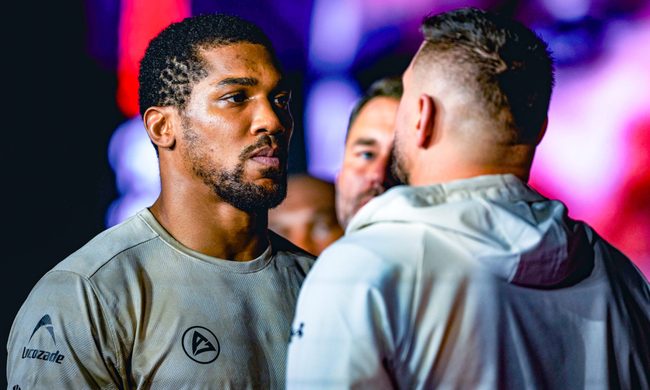
Saturday Packs a Punch With Anthony Joshua vs. Kristian Prenga and Errol Spence Jr. vs. Tim Tszyu
Adult, Male, Man

Your Saturday is pretty much booked if you’re a big boxing fan. But if not for Tyson Fury, the action would have actually started Friday morning with his heavyweight bout against Poland’s Mariusz Wach, which was NOT televised because the so-called Gypsy King opted to save the footage for the upcoming season of his Netflix series, At Home With the Furys. According to reports, Fury squared off against Wach at Max Muay Thai Stadium in Thailand, where Fury secured a seventh-round TKO. Fury’s dominant win sets up a once-in-a-generation heavyweight showdown against Anthony Joshua, provided the British boxing star keeps his end of the bargain on Saturday.

Joshua’s long-awaited return to the ring comes against Kristian Prenga in Jeddah, Saudi Arabia, as part of Riyadh Season. It’s Joshua’s first fight since he brutally knocked out Jake Paul at Kaseya Center in Miami in December 2025. While his fight against Paul was a sanctioned contest, Joshua’s last fight against a legitimate boxer came against Daniel Dubois in September 2024. Joshua, who was a passenger in a deadly car crash that killed one of his best friends in Nigeria days after the Paul fight, lost to Dubois via a fifth-round knockout.

Read more
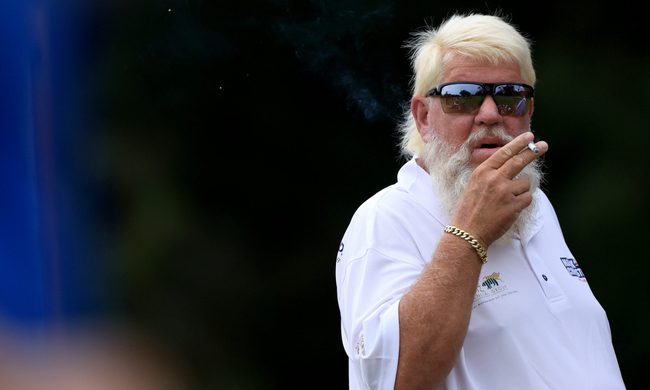
What I Learned From John Daly About Smoking Cigars
Body Part, Finger, Hand

I’ve been smoking cigars for two decades. I fell in love with the aroma when I walked into my first cigar lounge, Fair Oaks Cigars, in South Pasadena, California, when I was 21 years old. I remember my first stogie — Flor de las Antillas from My Father Cigars. During my early 20s and 30s, I smoked cigars religiously, at least five per week. I puffed alone in the living room, hours before getting ready to hit the town with friends. On my patio on a lazy Saturday afternoon. In the car during heavy traffic. On the rooftop lounge at the mid-high-rise building I lived in for a few years in downtown Los Angeles. Inside my loft — decked with concrete floors and walls, and exposed pipes — while watching pay-per-view boxing or a Dodgers game.

No matter the setting, smoking a cigar, to me, was the occasion. I never needed, nor do I need now, a reason to light up. It doesn’t matter if I smoke alone at a lounge or with friends on my patio; I love that, for an hour-plus, time slows down for me. Because smoking cigars can’t and shouldn’t be rushed. It’s not a cigarette. From the moment you light up to when you set down the final stub of a cigar, at least 45 minutes to an hour has passed, during which, if you’re like me, you made new friends, formed stronger bonds, and/or reflected on all that is great in your life.

Read more
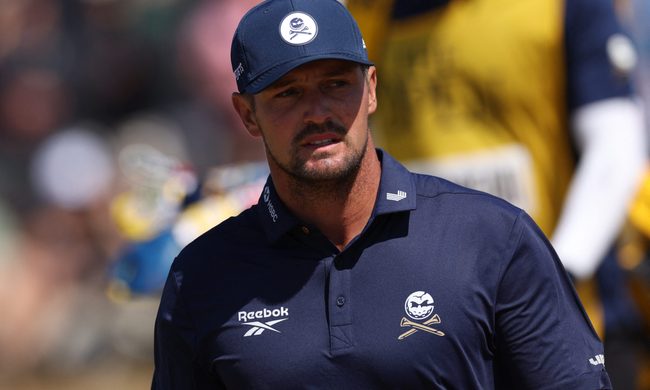
What’s the deal with Bryson DeChambeau? The Open Championship controversy explained
Baseball Cap, Cap, Clothing

It was Ryan Fox who birdied the 18th hole on Sunday to win The 154th Open Championship at Royal Birkdale. Despite the electric finish, all anyone’s talking about is Bryson DeChambeau, who was given a two-stroke penalty following Friday’s second round. The penalty has apparently divided the golf community, but the fact remains that DeChambeau’s response to the penalty over the weekend took away from Fox’s triumphant moment. And now, word is that DeChambeau reportedly tried and failed to rope President Donald Trump into said controversy.

The drama unfolded after Friday’s second round, when it seemed DeChambeau finished the day in sole possession of second place with a -7 under score heading into the third round. At least it appeared that way — until the leaderboard was updated to reflect a two-stroke penalty against DeChambeau, after officials claimed he stomped on the grass behind his ball to improve the line of his swing at No. 5. That, officials say, violates Rule 8.1, which states that, in order “to support the principle of ‘play the course as you find it,’ this Rule restricts what a player may do to improve any of these protected ‘conditions affecting the stroke’ (anywhere on or off the course).”

Read more