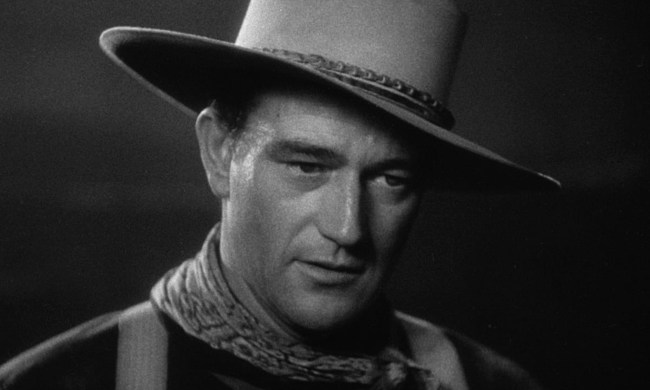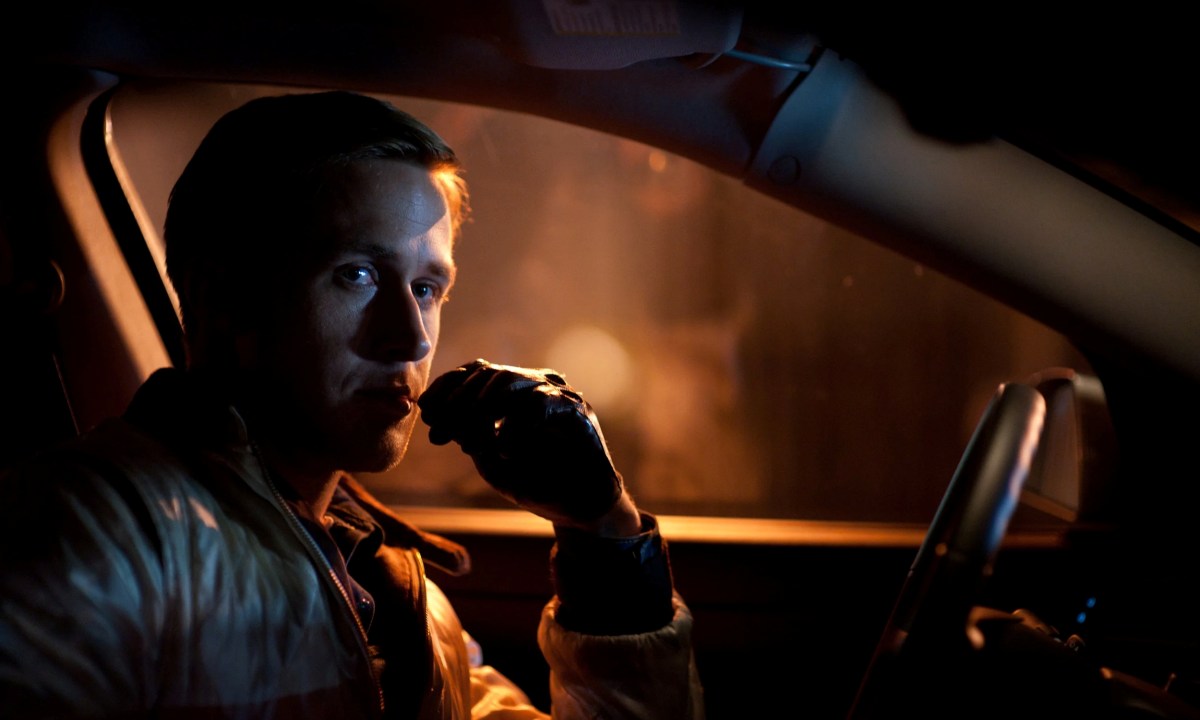
There are certain things every guy should know. How to make a decent drink. How to cook at least one impressive meal. How to change a tire. How to close with style. And somewhere on that list should be an appreciation for film noir.
Even if you’ve never watched one, you already know what film noir looks like.
A man in a trench coat walks down a wet city street at night. Venetian blinds slice a room into alternating bands of light and darkness. A beautiful woman walks into a private detective’s office and tells him a story that neither he nor we entirely believe.
Somebody has been murdered. Somebody wants money. Everybody has a secret.
Welcome to film noir.
So, what exactly is film noir?

That question is surprisingly difficult because film noir isn’t quite a genre in the conventional sense. The filmmakers making these movies in the 1940s weren’t calling them noir. French critics applied the term after World War II to a group of unusually dark American crime movies that seemed to share a style and worldview.
For our purposes, we can make it simpler: Film noir is a crime story about flawed people making bad decisions in a world where doing the right thing is considerably harder than doing the wrong thing — photographed as though darkness is gradually swallowing everybody. There’s usually a crime, frequently murder, but discovering who did it isn’t necessarily the point. Sometimes we know the murderer from the beginning.
The real question is: How did these people get themselves into this mess, and is there any way out? Usually there isn’t. And that’s the guts of it. He’s trapped. He knows it. But he needs to keep moving forward.
That’s noir’s wonderful sense of fatalism. The protagonist isn’t James Bond. He’s a private detective, drifter, small-time criminal or ordinary guy who makes one spectacularly bad decision. Frequently that decision involves a woman.
The femme fatale is one of noir’s great creations: beautiful, intelligent, sexually confident and quite possibly manipulating our hero for purposes of her own. What makes the situation particularly entertaining is that the man frequently knows she’s dangerous. He follows her anyway. Noir heroes can see the cliff coming. They just keep driving.
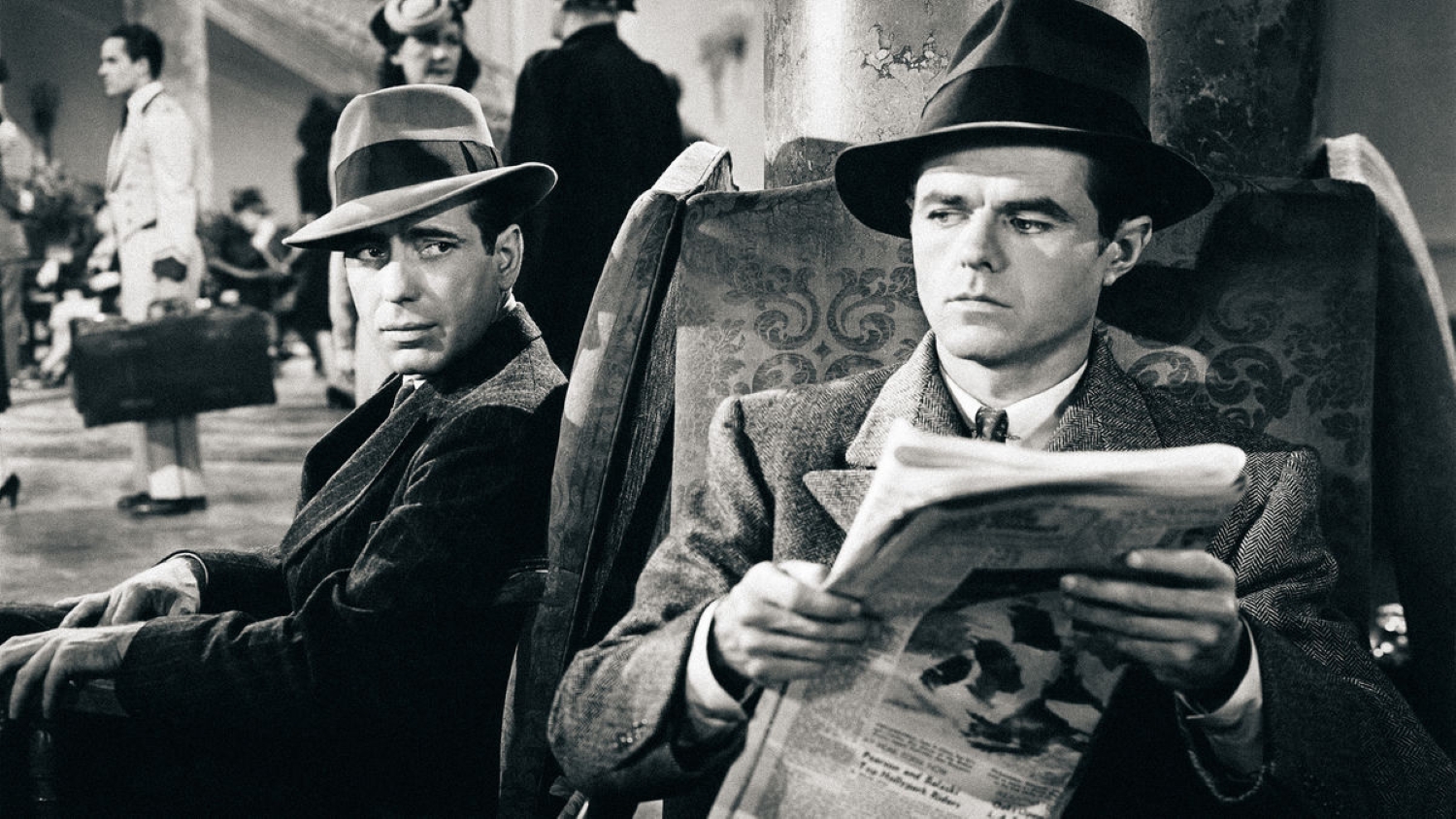
In The Maltese Falcon, Sam Spade confronts the femme fatale whom he suspects has killed his partner “He’d have looked you up and down and licked his lips and gone, grinning from ear to ear. This isn’t the spot for the school girl act.”
Then there’s the distinctive look. For anyone with an eye for photography, classic noir is a masterclass in visual storytelling: stark black-and-white film, deep shadows, cigarette smoke, nightclubs, rain-slicked streets, and unusual camera angles. Cities become less places to live than elaborate traps.
And everybody talks better than we do. Noir dialogue is cynical, hard-boiled and loaded with wisecracks and double entendres. People flirt as though they’re negotiating a hostage release. Real people have never talked like this. They should.
Why Noir Hits Harder in 2026
In a world saturated with AI-generated everything, fake-perfect social feeds, and constant digital burnout, noir’s raw focus on messy, inescapable human flaws is a necessary palate cleanser. It’s real sweat, real shadows, and real consequences.
The post-WWII anxiety that birthed classic noir maps perfectly onto our modern cultural cynicism. The underlying theme that the game is rigged, institutions are corrupt, and everybody is hiding something? That hits just as hard today as it did in 1946.
The Essentials: Where to Start
If you’ve never seen a film noir, start with director Billy Wilder’s 1944 classic, Double Indemnity. Fred MacMurray plays Walter Neff, a successful insurance salesman who meets Phyllis Dietrichson, played magnificently by Barbara Stanwyck. She’s married, attractive, and interested in buying accident insurance on her husband without telling him. Walter understands what she’s suggesting. This would be an excellent time to leave. He doesn’t.
Soon they’re plotting the perfect murder. We know from the beginning that things have gone badly because a wounded Walter narrates the story as a confession. The suspense isn’t whether he gets away with murder. It’s watching an intelligent man methodically construct his own destruction. Murder, greed, sex, betrayal, voiceover, flashbacks, a femme fatale and shadow-filled photography: Double Indemnity is essentially Noir 101. Edward G. Robinson is brilliant as his friend, boss, mentor and ultimately nemesis.
Next, go back three years to John Huston’s The Maltese Falcon (1941). Humphrey Bogart’s Sam Spade established the template for the noir detective: smart, cynical and suspicious, operating according to a moral code that seems to have been written entirely by himself. From the brilliant book by Dashiell Hammett.
Then watch Bogart again in 1946’s The Big Sleep, this time as Raymond Chandler’s Philip Marlowe. The plot is famously complicated. Don’t worry about it. Watch Bogart and Lauren Bacall. Listen to the dialogue. Enjoy the atmosphere. The Big Sleep teaches another important lesson about noir: Sometimes mood matters more than plot.
Jacques Tourneur’s 1947 Out of the Past may be noir in its purest form. Robert Mitchum plays a man who has escaped his previous life, but naturally, his past finds him. Mitchum is the ultimate noir actor because he seems simultaneously relaxed and doomed. The lesson here is simple: Your past eventually sends you the bill.
From there, move to Billy Wilder’s Sunset Boulevard (1950), which turns noir’s cynicism on Hollywood itself, narrated by a screenwriter floating dead in a swimming pool.
Check out Carol Reed’s The Third Man (1949) for a masterclass in tilted camera angles and postwar corruption.
Finally, watch Orson Welles’ Touch of Evil (1958), frequently regarded as the overheated, magnificent finale of classic noir.
Film noir ended. Noir didn’t.
By the end of the 1950s, classic film noir had largely run its course. But filmmakers had discovered something far too useful to abandon: morally compromised heroes, dangerous women, corrupt institutions, hostile cities and terrible decisions that can’t be undone. The result was neo-noir.
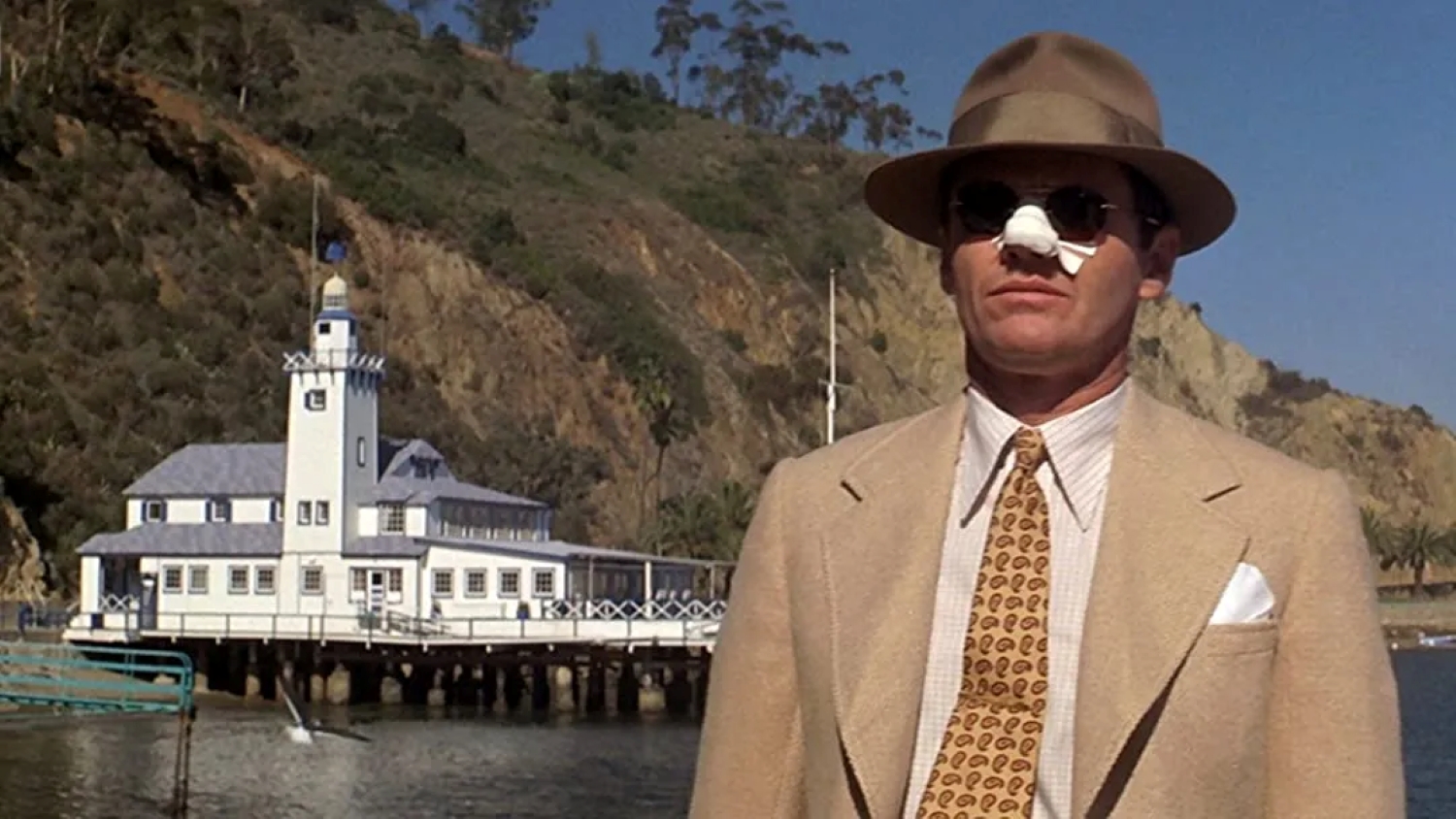
Start with 1974’s Chinatown. Jack Nicholson’s Jake Gittes is essentially a classic private detective dropped into a much darker modern movie, taking noir’s fatalism a step further: Sometimes the bad guys simply win. It closes with one of the great, fatalistic lines: “It’s Chinatown, Jake”
Then watch Body Heat (1981), essentially Double Indemnity remade for an era that could be explicit about the sexual desire motivating terrible decisions. That same year, Michael Mann’s Thief replaced black-and-white shadows with nighttime neon. Then Ridley Scott sent noir into the future with Blade Runner (1982). Strip away the spaceships and replicants, and it is remarkably close to a 1940s detective movie.
You can keep going through the decades: Blood Simple, L.A. Confidential, Fargo, Memento, and Drive all carry noir DNA. Even today, the genre thrives in modern streaming hits like Ripley or Tokyo Vice, proving that while the fedoras might be gone, the beautiful, doomed fatalism remains.
The Ritual: How to Watch
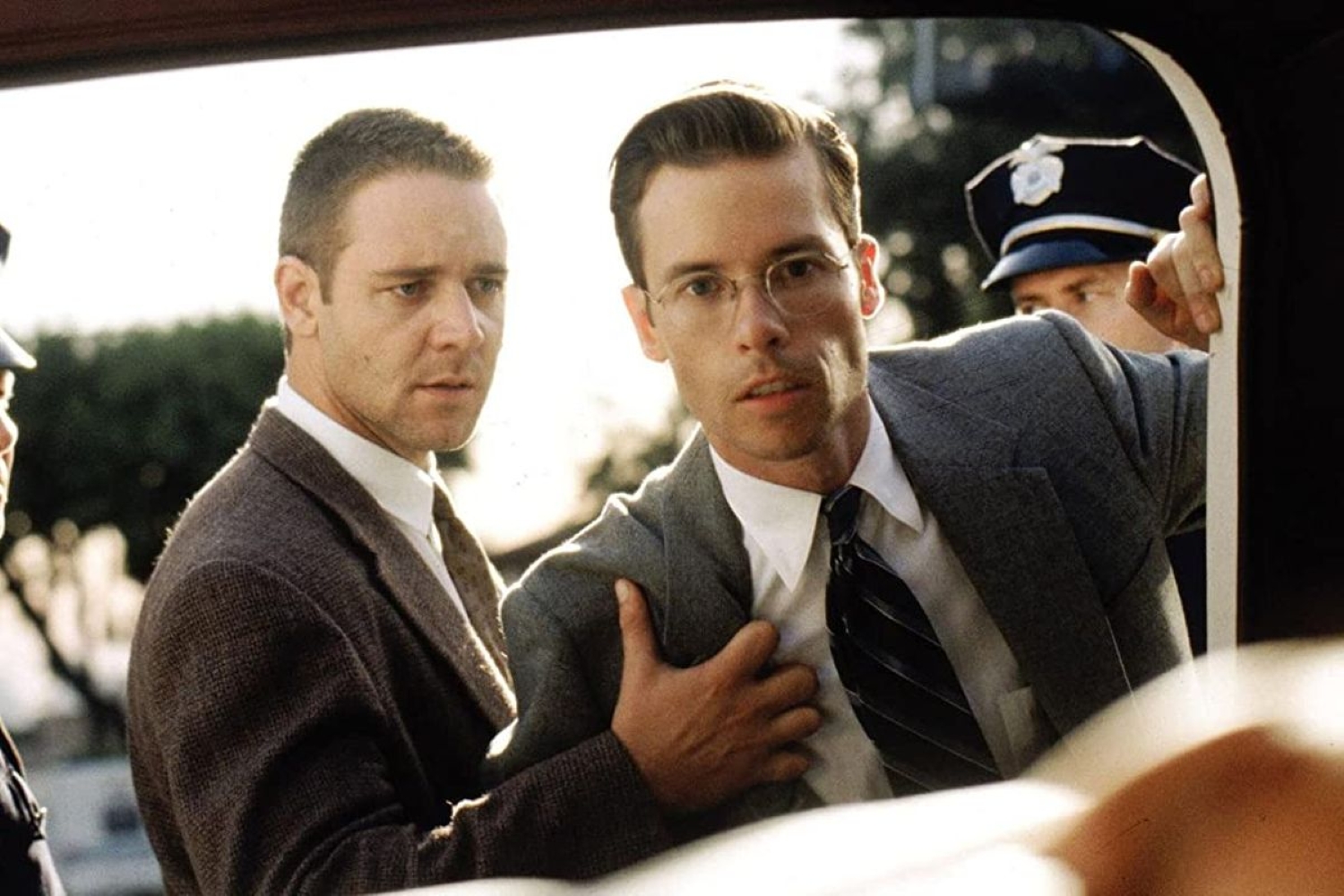
Watching a classic noir shouldn’t be treated like throwing on a sitcom in the background. It requires intention.
First, put your phone in another room—no, really. Noir relies heavily on rapid-fire dialogue, subtle visual cues, and shadowy details; it is absolutely not “second-screen” viewing. If you look down to check a text, you might miss the glance that explains the entire plot.
Second, pour something appropriate. A rye whiskey neat, a classic Old Fashioned, or a Gibson instantly puts you in the right atmospheric headspace. Turn off the lights and let the darkness of the room match the darkness on the screen.
Your assignment for this weekend is simple: clear your schedule for two hours and try watching just one of these films. Start with Double Indemnity or The Maltese Falcon.
Let yourself get pulled into the shadows.
Just remember the most important lesson film noir has to teach:
When an impossibly attractive stranger walks into you offers you a deal too good to pass up…RUN!