
Many people think saké is only made in Japan, should be served hot, and is just rice wine—but they’re wrong, says saké expert Paul Englert, President at SakeOne, Certified Sake WSET Advanced Level 3. As President of America’s first successful craft saké brewer, Englert seeks to break down these misconceptions surrounding saké. Below, Englert shares three of the most common myths about saké and why they’re wrong, from proper serving to brewing.
Myth 1: Saké should be served hot
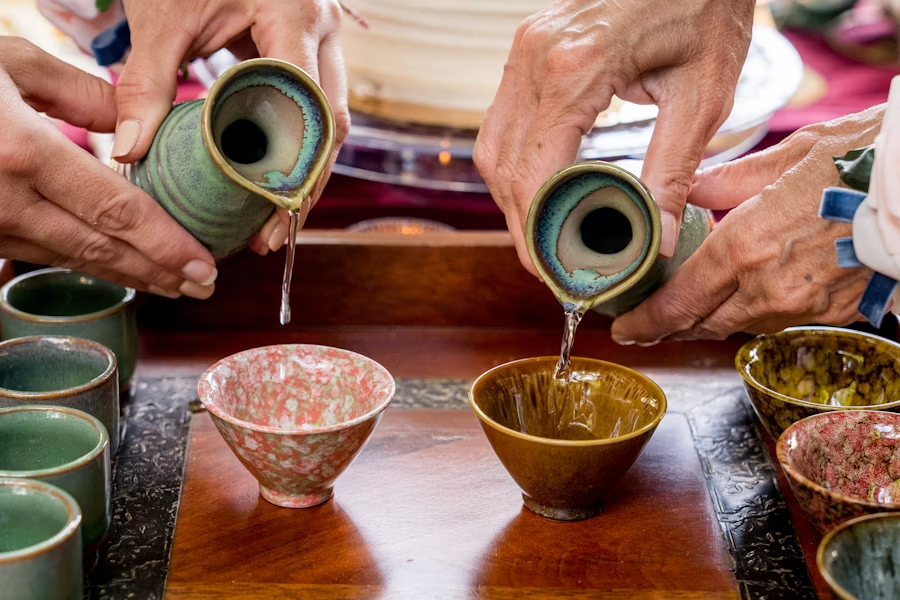
Many people think sake should always be served hot, but Englert says this myth is far from the truth. “Any well-made saké can, and most often should, be served chilled. Some well-made saké also does well at room temperature or served warm. And for some, there are times when they prefer saké served hot. However, I believe it is usually best to stick in the chilled to slightly warm range,” he says.
“For me, a Ginjo or Daiginjo saké, both of which tend to highlight fruit and floral characteristics, are best enjoyed chilled for the same reasons white wines are served chilled. For Honjozo or Junmai sake, the characteristics can often be more earthy or umami in nature, and a room-temperature or warm serving temp can highlight these flavors nicely. For the curious novice, I always recommend treating sake like a white wine – serve it chilled and in a wine glass.”
Myth 2: Saké is just rice wine

It is also a misconception that saké is just a rice wine, which Englert says is not entirely accurate. “Rice wine essentially means any alcoholic beverage created by fermenting rice. Yes, the classification of rice wines does include saké, but saké isn’t technically a wine.
There’s a saying that saké is brewed like beer and served like wine, but that’s not 100% true either. Saké isn’t a beer, a wine, or a spirit. It’s sake,” Englert explains. The unique brewing process of saké allows for more than one chemical reaction to happen at once in the fermentation tank, a process unique to saké.
Myth 3: Saké is only made in Japan

Another myth in the world of saké has to do with its source, as many people think it is only produced in Japan. While most sake, especially premium sake, is still made in Japan, Englert says Japanese producers are turning to the export market. “As the younger generation of Japanese consumers is not embracing sake as much as their parents and grandparents, producers are left to turn to the export market. With the explosion of Japanese cuisine across America, many are discovering the joys of sake. This thirst isn’t only being quenched by Japanese-made sake,” he says.
“Sake has been brewed commercially in the U.S. for decades. When American sake is made with quality rice, by gifted breweries following traditional Japanese methods, American craft sake can be made very similar to Japanese sake. Much in the same way as American wines began rivaling the best wines from France, we are seeing the quality difference between U.S. and Japanese sake shrink over time. Learning from the Japanese, American brewers have made tremendous strides and are receiving international acclaim for their sake.”


