If you’ve been to Rome before, you’ve likely done the greatest hits: the Colosseum, the Pantheon, the slow shuffle through St. Peter’s Basilica while pretending you’re not craning your neck quite as much as everyone else.
To be fair, those places are famous for a reason. But Rome, like any city that has been continuously inhabited for over two millennia, rewards repeat visitors, especially those willing to wander a little off-script.
On a second (or third) visit, the real magic lies in exploring the layers you didn’t notice the first time. Beneath the polished marble and postcard views lies a more complex, more interesting Rome—one shaped not just by emperors but by centuries of adaptation, reinvention, and, frankly, a fair amount of creative reuse. The late antique and medieval periods, in particular, offer some of the city’s most compelling and least crowded experiences.
While working on my PhD in Art History from UCLA, I spent months in Rome. Much of that time, I was far off the tourist trails, poking around Rome’s quieter corners, including its literal basements. My family and I often joke that my dissertation could have been subtitled, “Always another basement.”
Rome is a layer cake. It has been built up over time. The Rome of Julius Caesar is usually fifty feet below the current street level. Amazingly, many of these hidden places have been untouched for 2,000 years. You can literally reach back through time.
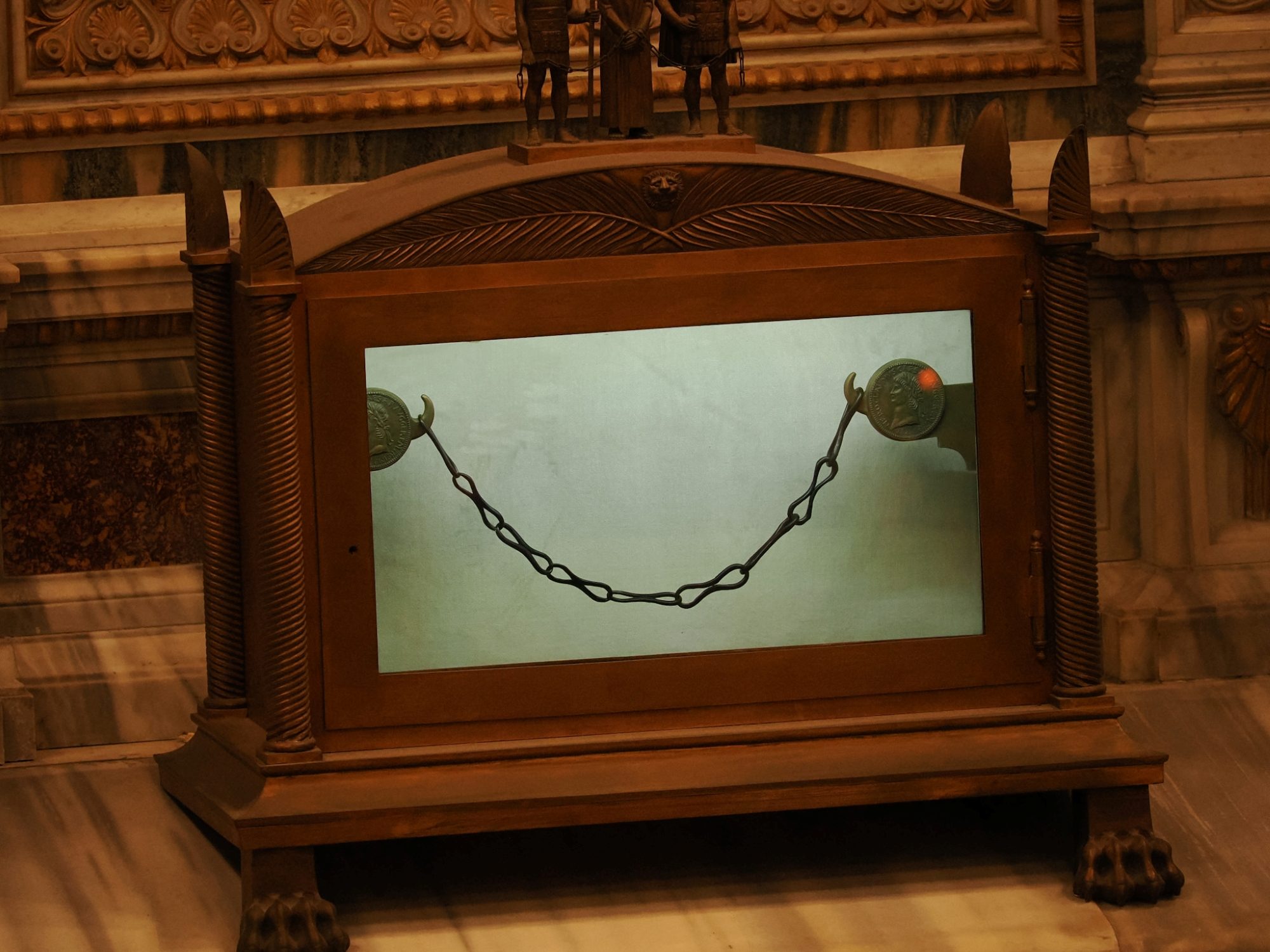
One of the most impressive sites that somehow still flies under the radar is the Basilica of Saint Paul Outside the Walls. As the name suggests, this incredible church is a bit further afield from the ancient center of the city, but very worth the distance. And, in fairness, it may be undersold more often than overlooked—it is, after all, the second largest church in Rome after St. Peter’s, and a major pilgrimage site in its own right. Visitors come from all over the world to see the chains traditionally associated with Saint Paul, a powerful and tangible connection to the early Christian past.
Yes, it’s one of Rome’s four major papal basilicas, and no, it’s not exactly obscure, but compared to its Vatican counterpart, it feels refreshingly calm. After a devastating fire in the 19th century, much of the church was rebuilt, but its early decorative program still carries the visual language of late antiquity.
The real showstopper is the 5th-century mosaic on the triumphal arch, traditionally associated with imperial patronage under Galla Placidia—the daughter, wife, and mother of Roman Emperors. Against a gold background, figures appear flattened, stylized, and almost abstract compared to the naturalism of earlier Roman art. If the classical world was obsessed with physical perfection, this moment marks a shift toward something more symbolic, more spiritual. The gold background evokes an ethereal feeling. It’s less about what the body looks like and more about what it means. Standing beneath it, you can practically feel that pivot in real time, a subtle but profound redefinition of what art is supposed to do.
For something more intimate, head to Santa Costanza, a small, circular structure that feels surprisingly modern despite dating to the 4th century. Originally built as a mausoleum, likely for Constantina, the daughter of the first Christian emperor Constantine the Great, it breaks from the typical basilica layout in favor of a centralized plan more common with burial chapels. Translation: it feels less like a processional space and more like a contemplative one. Inside, a ring of columns frames a walkway adorned with mosaics that might make you do a double take. You’ll spot putti (cherubic figures) harvesting grapes in scenes that look suspiciously pagan. And yet, they coexist with imagery that can be read through a Christian lens. It’s a visual reminder that cultural change is rarely neat or immediate. Instead, it’s layered, messy, and full of overlap. Think of it as Rome’s version of a transitional house decor moment; some things are held onto longer than expected, but they eventually find new meaning.
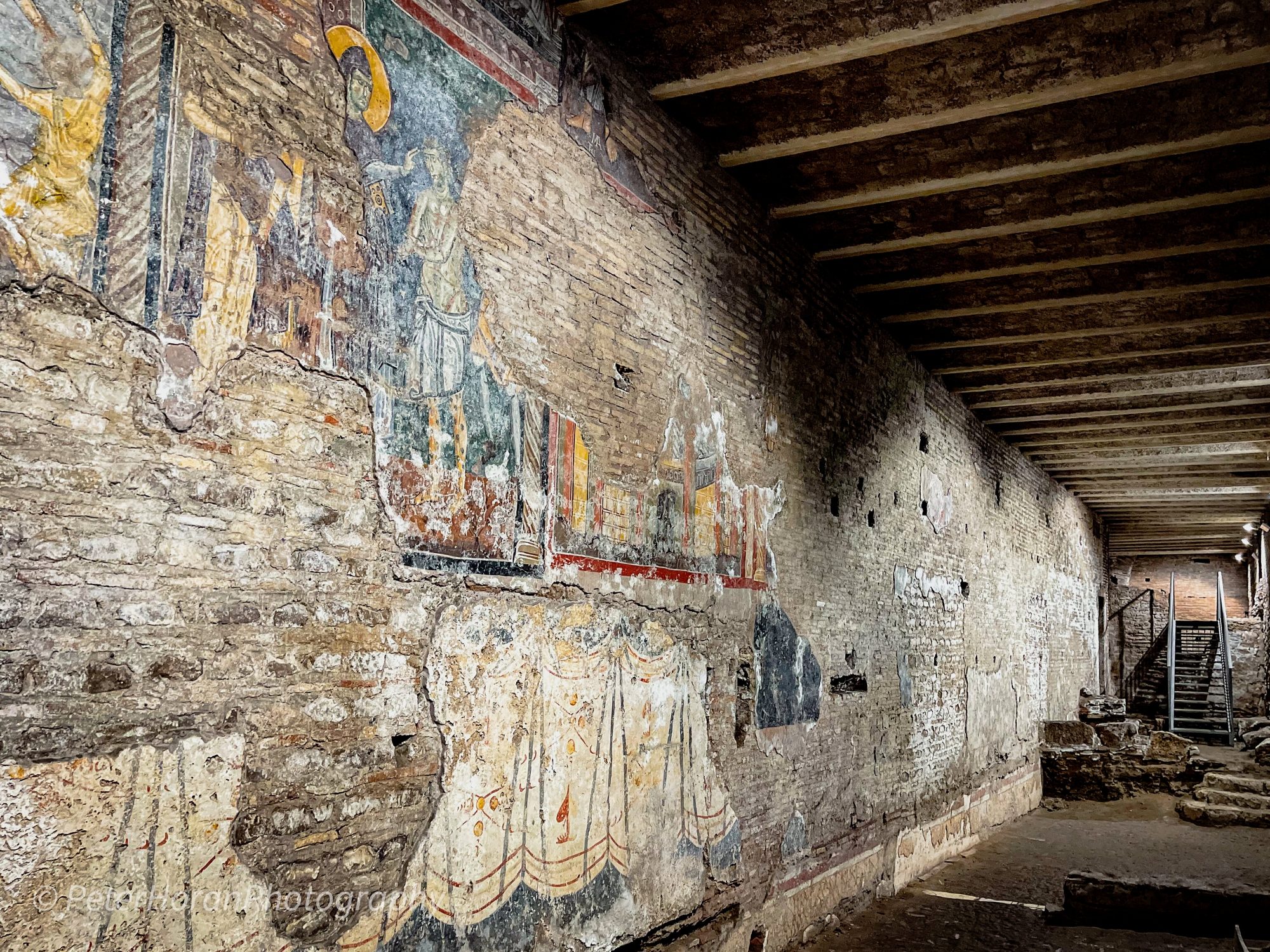
If you’re ready to fully embrace Rome’s “layer cake” of history, make your way to the Basilica of San Clemente, located in the center of tourist Rome near the Colosseum. At street level, it appears to be a fairly standard medieval church. Step inside, though, and things get interesting, then keep going down even further. Beneath the 12th-century basilica lies a 4th-century church, complete with early Christian frescoes that feel remarkably immediate. Below that? Ancient Roman structures, including a private home and a Mithraeum—a shrine dedicated to the god Mithras, who was popular with Roman soldiers.
Descending through these levels is like moving backward through time in real, physical space. The air gets cooler, the light dimmer, and the crowds are thinner. It’s atmospheric in the best way, equal parts awe-inspiring and slightly eerie. More importantly, it underscores a key truth about Rome: nothing here really disappears. It just gets built over, repurposed, and folded into whatever comes next.
For a final stop that requires a bit more effort but pays off handsomely, venture out to the Museo Nazionale dell’Alto Medioevo. It’s not centrally located, which means it’s often overlooked in favor of more convenient options. However, once you get out there, you are surrounded by excellent museums with minimal crowds, including the National Museum of Prehistory and Ethnography and the Museum of Roman Civilization. Moreover, it is housed in a space built under Mussolini for a 1942 World’s Fair that never happened. Complete with the Obelisk of Marconi, the museums are housed in a zone that is a monumental example of fascist architecture. If you’re the kind of traveler who doesn’t mind a short detour for something genuinely special, this is your place. One of its highlights is a reconstructed room from Ostia decorated in opus sectile, a technique that uses precisely cut pieces of colored marble to create intricate designs. Unlike mosaics, which rely on tiny tiles, opus sectile feels almost painterly in its precision. The materials, full of deep greens, rich purples, and creamy whites, create a space that is both luxurious and technically impressive.
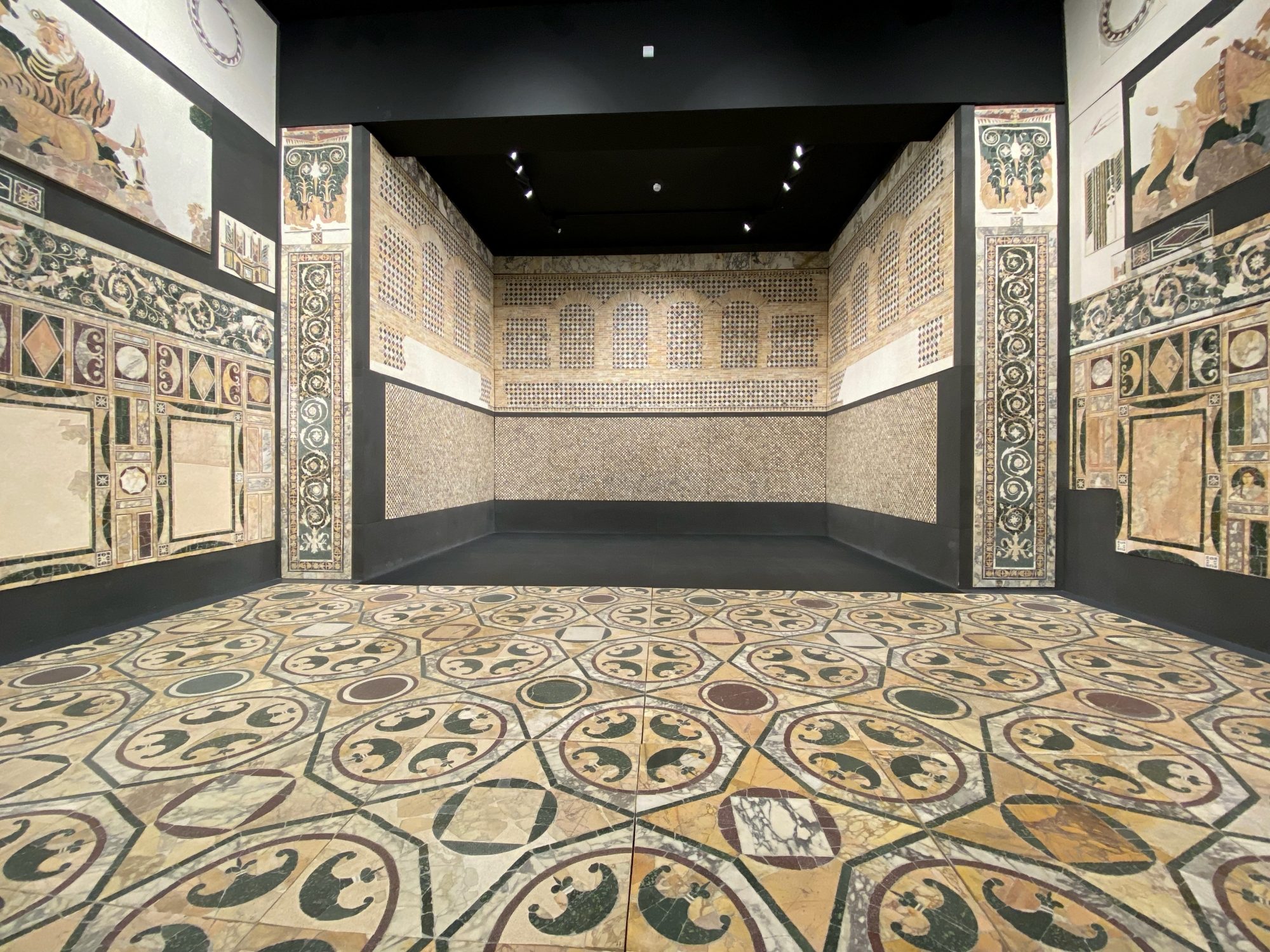
It also quietly dismantles the old narrative that art somehow “declined” after the fall of the Roman Empire. If anything, it evolved. Artists experimented with new materials, new aesthetics, and new ways of conveying meaning. The result is work that feels different from what came before, but no less sophisticated. Taken together, these sites offer a different version of Rome, one that doesn’t revolve around sites from the film Roman Holiday or perfectly framed photos. Instead, it invites you to slow down, look closely, and appreciate the city as an ongoing process rather than a finished product.
It’s quieter. It’s a little less polished. And in many ways, it’s far more memorable.