1. Home
  2. Fashion & Style
  3. News

The Hermès Arceau Petite Lune watch paints a clear picture of the universe

This is how the universe would look like on a dial

Hermès Arceau Petite Lune
Hermès Arceau Petite Lune Hermès / Hermès

The new Hermès watch is a fine representation of the cosmos.

The dial of the new Hermès Arceau Petite Lune can send you straight to space, thanks to the high-quality details and finishes. At the 10 o’clock denotation, a moon phase adds to the whole look and complements other elements featured on the dial. It expands into an eclipse, which is accentuated by diamonds to reflect light stylishly.

Recommended Videos

The eclipse-like art cuts through the dial and features 15 diamond stones placed in different positions.

Even though diamonds highlight the dial, the casing has more diamonds. Diamonds on the casing have the same shape as the eclipse diamonds featured on the dial—think of it as a mirror reflection.

While this Hermès timepiece comes with a blue dial, the hue darkens towards the edges. But, the center has some white flecks—a depiction of the sky at nighttime. They are scattered all over the dial, just like stars in a clear sky.

The hour hand, which also sits at the center of the dial, has a silver-like appearance that creates a beautiful contrast between different components. It’s also worth noting that the middle section of the hour hand was cut to offer views into the eclipse-like art.

Since Hermès specialized in leather from the 19th to 20th century, it often rolls out watches with high-quality leather straps—the latest timepiece is no exception.

This new watch explores the brand’s history, featuring a blue strap that blends smoothly with other components. The strap has a unique pattern that takes the look to a new level. The Hermès Arceau Petite Lune is priced at $19,500.

Nathan S.R
Former Digital Trends Contributor
Nathan has devoted his life to collecting watches, studying horology, reviewing watches, and writing about timepieces. As a…
Topics
Longines refreshes its cult-favorite central power reserve in light blue
The Swiss watch company is giving the Conquest Heritage Central Power Reserve some new dial and bracelet options.
Wristwatch, Arm, Dial

Longines has been around since 1832, which makes it one of the oldest continuously operating watchmakers on Earth — old enough to have spent decades strapped to the wrists of aviators and explorers before most brands existed. So when the Saint-Imier company, now part of the Swiss giant Swatch Group, revives something from its own archives, it's got real history to draw on. The Conquest Heritage Central Power Reserve is a good example.

The Conquest line dates to 1954 — the first Longines collection to have its name trademarked with the Swiss IP office. And in 1959, one Conquest model introduced the complication this watch is built around: a power reserve indicator planted dead center on the dial. For 2026, Longines has given the modern revival a light refresh: a new light-blue opaline dial and (for the first time on this model) a stainless-steel bracelet alongside the returning dark leather strap.

Read more
Shohei Ohtani’s newest Seiko is out of this world
Seiko built Shohei Ohtani a one-of-one watch that tracks a million hours across five rotating discs — and you can't buy it.
Wristwatch, Arm, Body Part

The Seiko Star Time, presented to Shohei Ohtani on July 3, marks his tenth year as a Seiko ambassador. It's not for sale, will never be for sale, and there's exactly one on Earth — currently strapped to the best baseball player alive. Oh, and also? It looks absolutely nuts. Instead of hands, the Star Time tells time with five stacked, concentric discs, each tracking a different scale of accumulated time: 24 hours, then 1,000, 10,000, 100,000, and finally a disc that runs all the way to one million hours.

That's roughly 114 years — a full human lifetime, give or take. The discs turn continuously, so slowly you can't see them move. Seiko named it "Star Time" for exactly that reason: like stars drifting across the sky, the motion is imperceptible in the moment but relentless. A little existential for a watch company, but let's go with it.

Read more
The Internet Killed Expertise and Then Made It Cool Again
How the Internet Killed Expertise, Made It Worthless, and Then Made It Cool Again
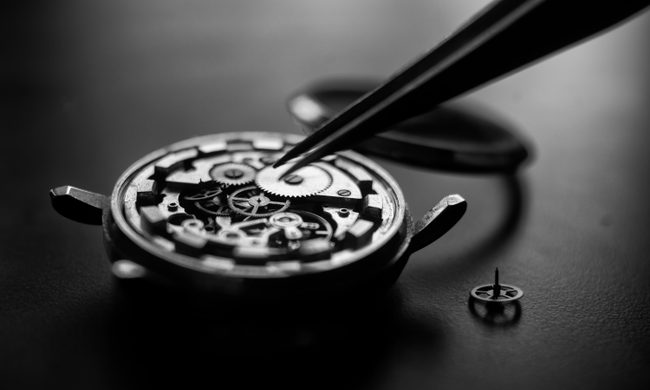
Watchmaker's workshop. Mechanical watch repair.

We’ve gone through a little period that I like to call the “Dark Ages of Knowing Things,” when the internet had an entire generation of men convinced they no longer needed experts. Why would they? Everything was available at the drop of a hat, and with one Google search, you could have the world at your fingertips. There were deep-dive forum threads written by a retired Swiss watchmaker in Neuchâtel who had seen 40 years of studying the serif on a Rolex dial (probably, but I can’t actually verify that.) It was all there, free for the taking, and unfortunately, completely indistinguishable from a guy who just bought his first watch 6 weeks beforehand and was already writing a buying guide. 

For a while at least, it felt like the walls were coming down, and in some ways, they were. The gatekeepers no longer had their gates, which meant that a kid from Doncaster could learn to identify a fake Submariner faster than a back-alley dealer who had been in the business for 20 years if he simply spent enough nights casually perusing Reddit threads. Knowledge, we were told, should be free. Of course, nobody mentioned that free knowledge and good knowledge are not the same thing.

Read more