Pickleball is one of America’s fastest-growing sports. The ease of access, simple gameplay, nonstop action, and social connection makes pickleball an attractive sport. Like any love affair, though, there are finer points and certain pickleball rules that need to be defined a little more explaining. And as with becoming a professional at any sport, it’s critical to understand the finer elements of gameplay.
Pickleball rules might be easy to understand, but it’s in the specific details that things get muddy. We’re here to review some of the most unusual and lesser-known pickleball rules and regulations to make sure all of your matches remain friendly.
No listening to your favorite music
Let’s get an easy one out of the way first. USA Pickleball deems that, except for prescribed or necessary devices like hearing aids, “players shall not wear or use any form of headphones or earbuds during competition play.”
This could be left up to those playing to decide for themselves during their game. But in general and during serious play, personal audio equipment is a no-no, even if Rage Against the Machine brings your game to another level.
Lost equipment could cost you
- Keep all hats, sunglasses, goggles, sweatbands, and other gear inside the ride at all times.
Generally, the preferred arena for pickleball is on an outside court. During an intense rally, these accessories fly off, causing at least an interruption in concentration. Could this equipment loss also result in a point loss?
According to The Pickler blog, a fault occurs if an item lands in the non-volley zone in connection with a volley — a volley defined as hitting the pickleball before it bounces. In other words, if a player strikes the
If equipment lands anywhere outside of the non-volley zone, on the court or not, the play keeps going. This applies even if the pickleball hits the lost item. Obviously, it’s going to be tough to gauge the bounce off of a dropped hat or shirt, so make sure to keep things tight so you don’t lose a point. And, to be on the safe side, continue playing no matter what until a fault is called.
There are rules for equipment adjustments
- Be quick with your small adjustments
- Bigger issues require a timeout
Pickleball might be a loose game, but players are expected to control their apparel and keep their equipment in playable condition. Quick adjustments to apparel or equipment — tying shoes, cleaning shades, adjusting hats — are allowed between rallies.
Time-outs and the two minutes between games are for more complicated adjustments and replacing gear. Per USA Pickleball’s Official Rulebook, if a player or team is out of time-outs, the referee holds the key to determining the need for an equipment change or necessary adjustment, allotting a potential two-minute timeout.
The 10-second rule and timeouts
How the 10-second rule works
More recently, pickleball instituted a 10-second rule to discourage those players who take forever to serve. The USA Rulebook applies to servers and receivers, “each of whom is allowed up to 10 seconds after the score is called to serve or be ready to receive.” It’s the server’s responsibility to make sure the other side is ready, but that 10 seconds is technically ticking as soon as the referee calls out the score.
If 10 seconds elapse without a serve, the ref issues a technical warning. If this delay continues, referees could award the opposing team a point. This also applies to the receiving side, which has to be ready to receive the serve once the score has been called.
Why the 10-second rule exists
Allowing more than 10 seconds between points drags the game out and lessens the competition if players are allowed to recuperate after every tough rally. There’s no crying in baseball, and there’s no mercy in pickleball.
Competitors who need a break should call a timeout before the serve. The rules allow players and teams two one-minute timeouts per each 11-point game. For 21-point games, three timeouts are allowed.
Motion rules while serving
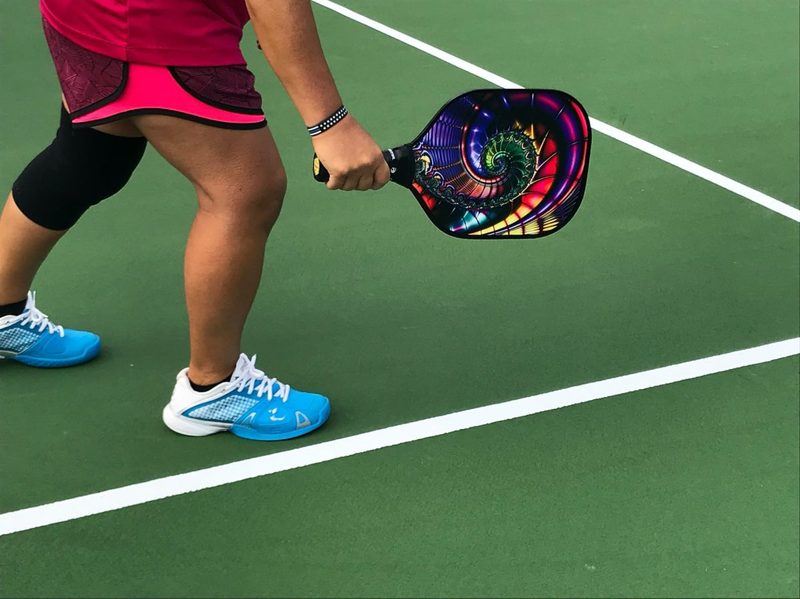
As for serving, it’s pretty simple. There’s more leeway in recreational pickleball, but there are rules about the serving motion that pickleballers should be aware of, especially in more serious competition. More veteran players should turn to the International Federation of
Per the IFP’s official tourney rules, “the serve must be made with an underhand stroke so that contact with the ball is made below waist level (waist is defined as the navel level).”
Why is this important? Well, overhead shots produce more power. Skirting the gray area of this rule could give players a slight edge. If the paddle head strikes the ball above the belly button, this results in a fault. This is so important that the IFP defines what “underhand” means.
“The arm must be moving in an upward arc and the paddle head shall be below the wrist when it strikes the ball (paddle head is that part of the paddle excluding the handle. The highest point of the paddle head cannot be above any part of the line formed where the wrist joint bends).”
This cuts out slicing, smashing, and the topspin, unless players achieve that via underhand serve. For a more in-depth exploration of the underhand serve, check out the Pickleball Channel’s extended guide:
The line and the net are serving no-nos
Pickleball regulars know that when serving the ball must clear the kitchen line. The kitchen is the seven-foot-long no-go zone for volleys. The line is two inches thick, and a player’s serve cannot touch any part of this line, needing instead to completely clear it for a valid serve. If the ball hits the kitchen or the kitchen line, it’s a fault.
It’s also a fault if the pickleball grazes the net before landing in play space. The rule used to be that clipping the net and then landing in the serving box was a let (like tennis), but that has evolved with the game. Once a successful serve has landed, the ball is in play and can land on any court line to stay in play. The only time the lines are considered out is at the back of the kitchen on a serve.
Line-calling guidelines
Speaking of line calls, let’s lay out a few guidelines for line calling. Mostly, pickleball is played for fun, so it’s helpful to take a “do unto others” attitude.
Applying those IFP tourney rules, players on line-calling duty must give opponents the benefit of the doubt to keep up fair play. To define who should make line calls, players should only make calls on their section of the court. Players should not question an opponent’s call unless the other player asks or if there’s an appeal to the referee.
Judgment calls should be up to those with a perspective straight down the line. Calls need to be quick and made while the ball is still in play. Pickleball is a fast and furious game where calls are tough. In general, give your opponent the benefit of the doubt. Ethics are important.
Spectators may never participate in line calls. High-level pickleball competitions have already had past issues with this. If you’re watching a match, you are a spectator and not allowed to have your say. Just zip it and enjoy the match.
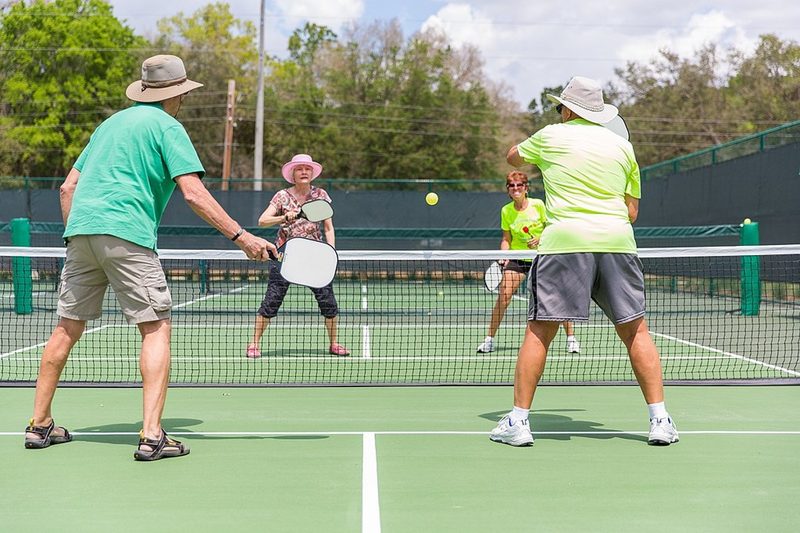
No heckling allowed
Sports like baseball and especially hockey come with a lot of trash talk between the teams – and even the fans and the players. In pickleball, that’s all a huge no. Think along the lines of tennis and golf, where there is complete silence for the swing and serve.
This means
- No loud talking on the court
- No stomping your feet
- No yelling
- No making any other loud or distracting noises
Now, talking between players, as in calling out what kind of shot they think is going to happen or who is getting the hit, is completely fine. You are playing a sport, and you will have to chat with each other.
Now that you know every single in and out of how to play pickleball, even the grittier
Pickleball, like all other sports, will continue to evolve with time, play, and technology. What will remain is the game’s core philosophy: