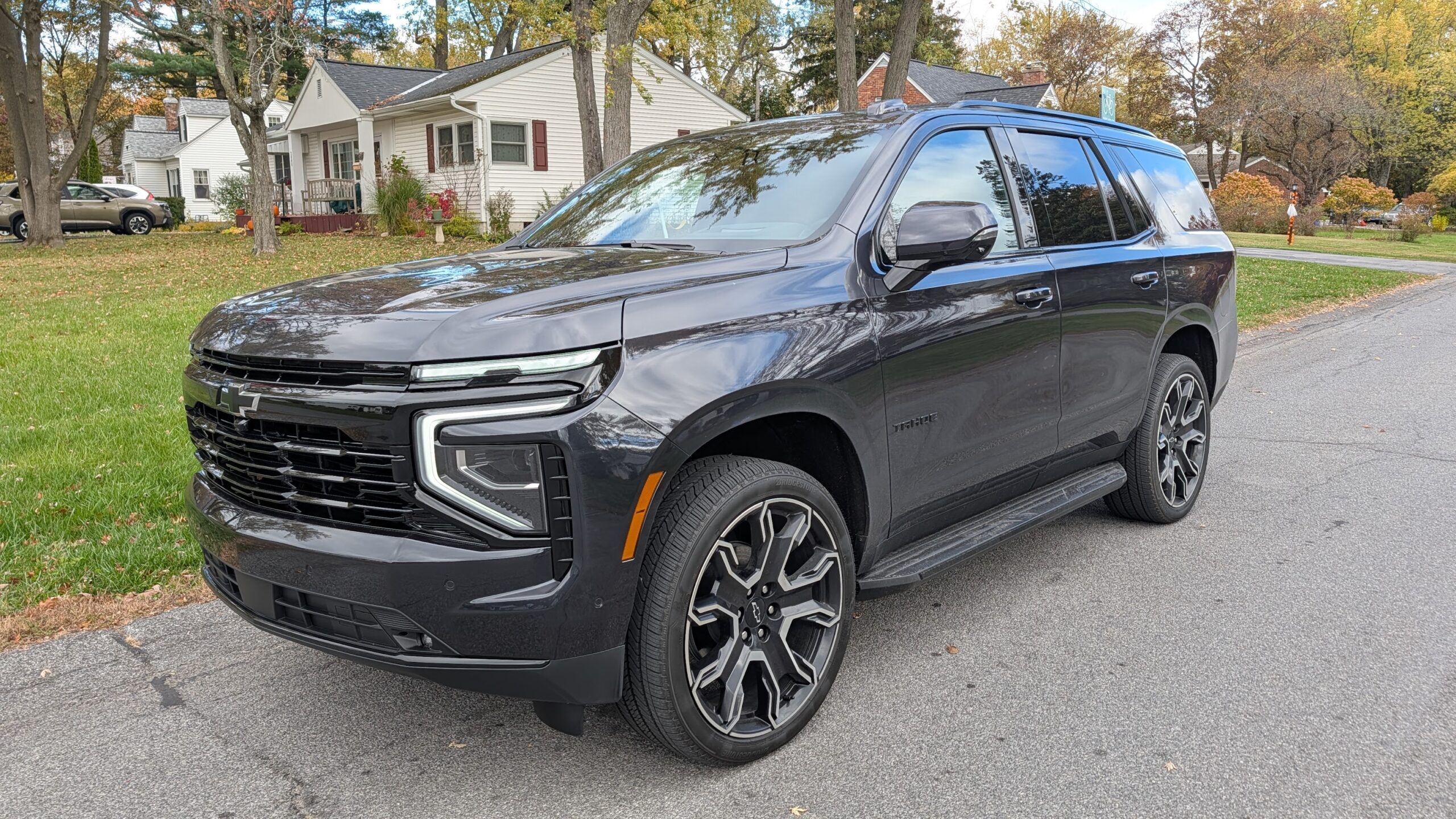
The 2026 Chevy Tahoe is GM’s offering in the very competitive “full sized SUV” price point. That’s the full on, massive, body-on frame offering that gives you a functional third row and the ability to drive the vehicle around when the bodywork is seemingly 99% rust and 1% bubbled up paint holding all the particles together.
So how does the Tahoe stack up against the competition? Well it really stands out in three categories. The quality of its cruise control, its interior offerings, and what you’re going to find under the hood.
The Tahoe’s engine sets it apart
The V8 came very close to dying out. Stellantis tried to ditch its V8s entirely (though it quickly realized its mistake) and ditched the V8 from the Jeep Grand Wagoneer in 2024 (though it might be coming back if rumors are to be believed.) Ford, despite having one of the best V8 engines in the universe, dropped the option from the Expedition over a decade ago.
Chevrolet doesn’t seem to have had this dilemma, and the 6.2-liter V8 hauling the Tahoe RST I tested was always going to be an option. Yes, most trims have the smaller 5.3-liter V8, and if you really want to prioritize towing capacity a torque-heavy turbodiesel inline six is available, but the big V8 is definitely the fun choice. With 420 horsepower and 460 lb-ft of torque it’s definitely capable of hauling plenty itself. The Tahoe with this powertrain has a towing capacity of 8.200 pounds. It also offers a 5.8 second 0-60 time, which is fast in a vehicle this massive.
You will pay the price at the gas pump though. The Tahoe RST’s MPG rating drops as low as 14 in the city and 19 on the highway on paper. On asphalt, I may have gotten an even worse result, with some short trips averaging around 12 mpg. It’s not the least economical thing I’ve driven in recent months, but it’s down there.
In terms of handling, the Tahoe is fine. It’s not the featherlight handling that’s so accurate that you feel like the wheel has merged with your subconscious, but it does the job. It does have the sense of something that will feel bad in 10-15 years, like this will be a poorly handling second hand vehicle one day, but that’s pure speculation on my part and probably not your problem when you look at the length of time new car buyers actually own a vehicle.
The interior is luxury-adjacent, and Chevy may be holding back
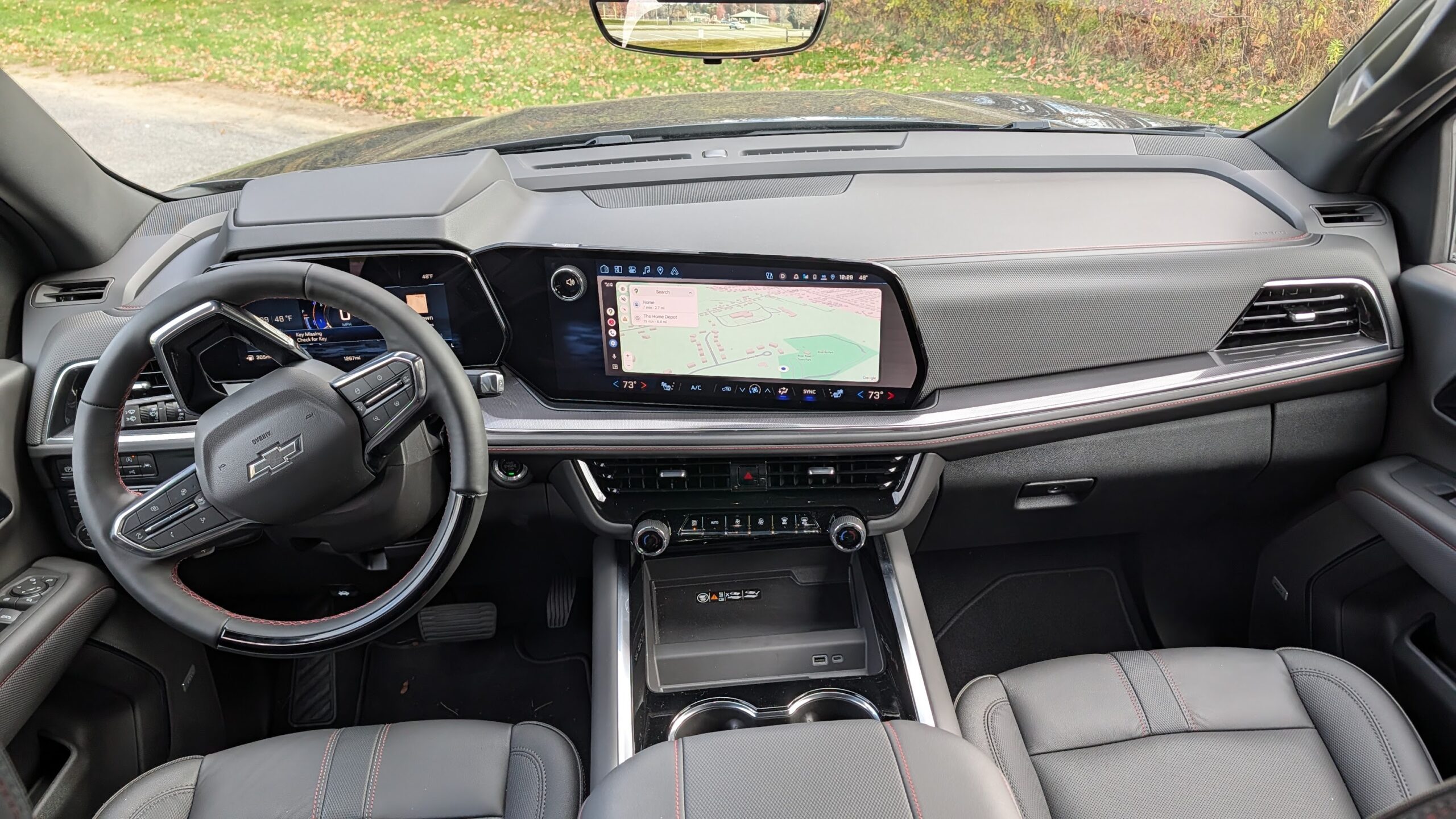
In terms of interior quality, the Chevy Tahoe occupies a strange niche. It’s nicer than the Expedition, it doesn’t have the truck-like utilitarian feel of Ford’s full-sized SUV. Instead, everything is clad in pretty pleasant leather. The infotainment system’s hardware is also better than Ford’s , with the 17.7-inch LCD display definitely projecting a feel of quality and luxury into the cab.
But none of this is as nice as what you would find in a Lincoln Navigator. The Navigator definitely feels more opulent, and is rocking a the 47-inch dash length display. The Tahoe is more plain, reserved, and businesslike. This is likely because it’s leaving the “luxury” level of comfort to Cadillac.
What is still great in the Tahoe, but bad in similar vehicles relates to Chevy’s (and GM’s in general) attitude to Apple Car Play and Android Auto. Both systems are still present in the 2026 Tahoe, or they were at the time of testing. And they are available via Bluetooth, it isn’t like the Cadillac Escalade, where you need to find a USB cable to get the third-party infotainment systems going. But these infotainment options are already gone from the Escalade IQ, and I probably won’t be able to write this about the 2027 Tahoe.
I’m going to talk about SuperCruise again
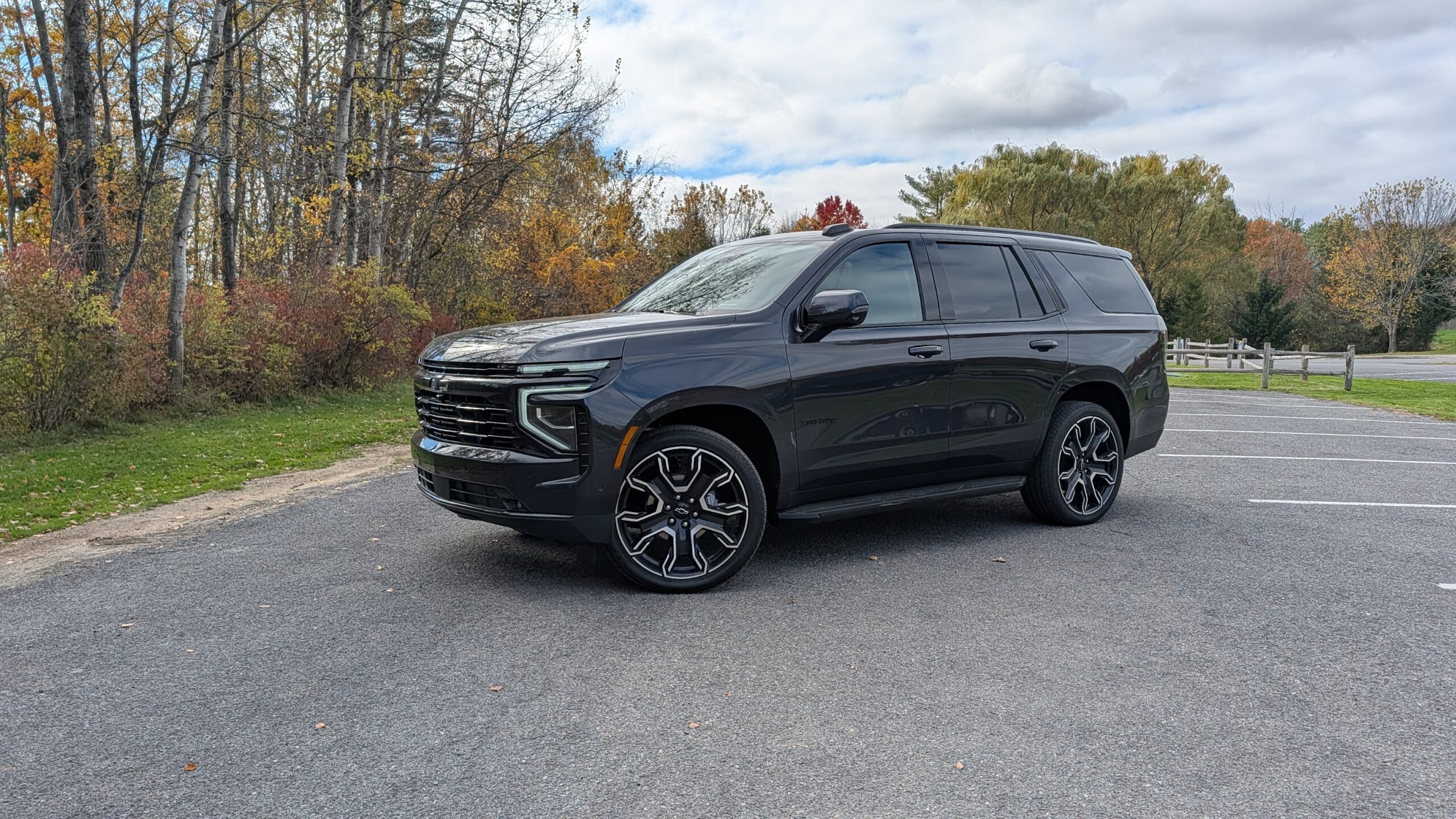
Two things seem to happen in my GM reviews. I have a bit of a rant about the company’s decisions regarding Car Play/Android Auto, and I spend a few paragraphs waxing lyrical about how excellent SuperCruise is. You’ve just read the first part, now brace yourself for the second.
SuperCruise is the best Level 2 system on the road at the moment. It can be activated on roads competitors would not even dream of risking at the moment, and on the highways you only have to touch the wheel every now and then to remind the system you are actually still alive. Otherwise it does all of the work, overtaking included. You still have to do minor things.
I’m unsure if it will shift lanes if it spots a broken down vehicle or cop on the shoulder, it’s not something I’ve risked testing (and you should be paying attention for these things with a level 2 system anyway). It will shift across if it sees a vehicle trying to merge from the on-ramp though, so SuperCruise does display a solid level of driving awareness. It will also overtake slower vehicles, then shift back into the lane it started in as soon as it can.
This is a solid SUV, if you’re happy with the V8 trade-off
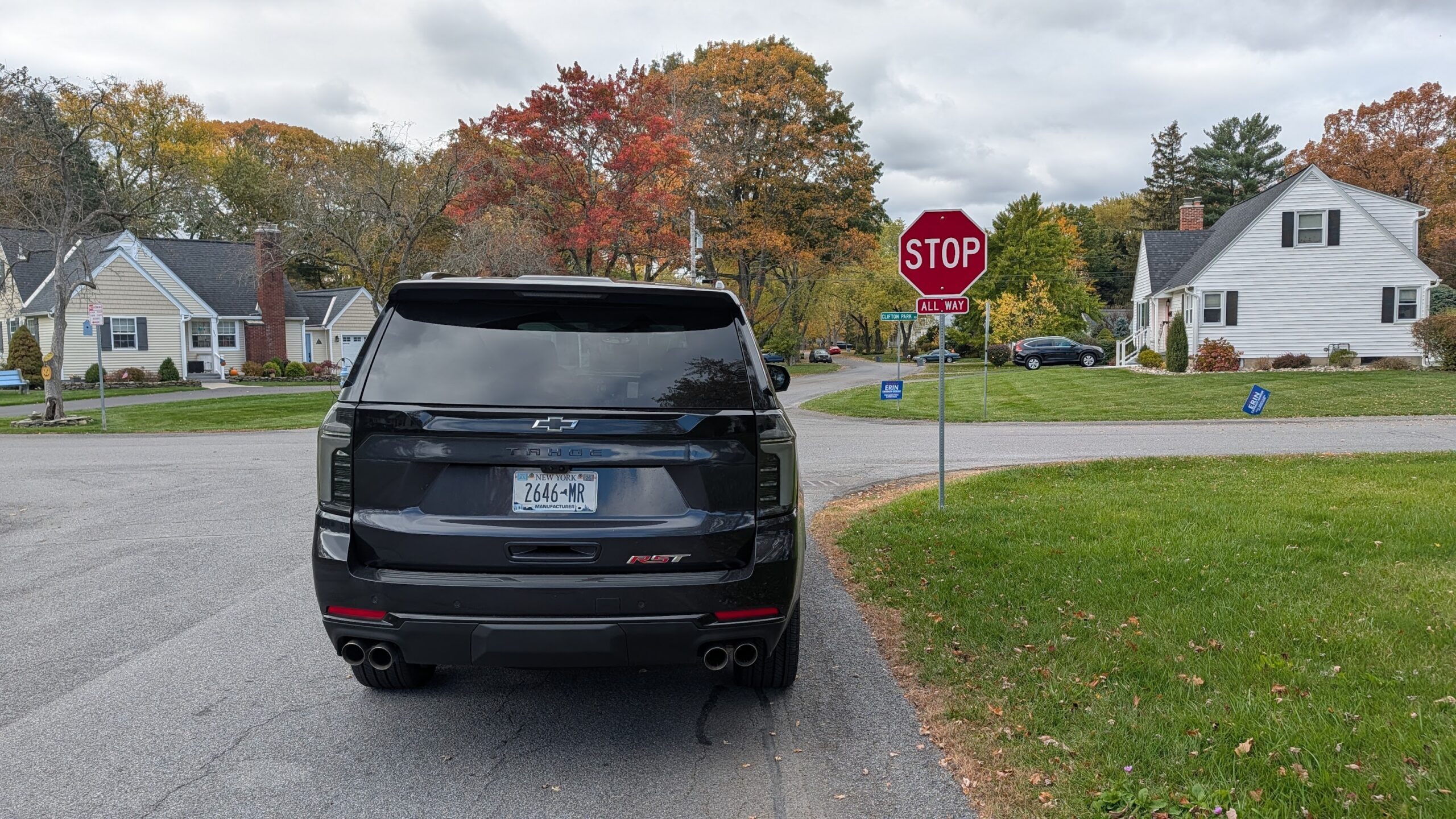
Between the level of comfort offered, the powertrain, and the obscenely good self-driving system on offer, the Tahoe is a very solid pick for those shopping for a full-sized SUV. For me, it all actually hinges on that powertrain.
Personally, I love the V8. It sounds great, and it’s capable of hauling something the size of a Chevy Tahoe along without making the experience unpleasant. You do pay a premium on this, your SUV is going to absolutely drink gas, which may be fine when said gas is less than $3/gallon but will be an issue should gas prices move up or if you decide to live in California for some reason. The other end of the tradeoff is your daily driver sounding awful and feeling shockingly anemic every time you put your foot down. Unless they decide to make a hybrid, which solves most of those issues but still robs you of the sound and that little bit of soul.