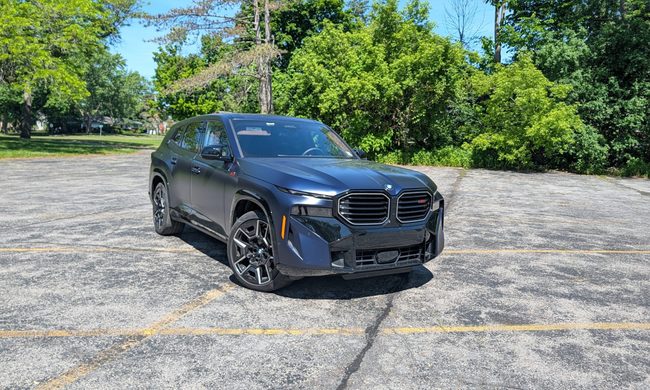
Lucid has unveiled two of its three upcoming midsized EVs. I got up close with one of them during the company’s 2026 investor day, and could immediately tell what its main competitor would be.
German manufacturer BMW also has a midsized, tech-heavy, EV on the horizon. The iX3 is set to hit the road this summer, and until the Lucid Cosmos popped its head up it was looking like one of the best value vehicles on the market.
What are we expecting from the iX3

The iX3 is the first of BMW’s “Neue Klasse” vehicles, a new generation of EVs designed to appeal to the mass market while keeping BMW’s core identity intact. BMW’s first “Neue Klasse” production vehicle is set to hit North American roads in mid-2026. Production has already started in Europe and the first vehicles were delivered there in early 2026.
Only the iX3 50 xDrive (the mid-level one) is expected in the initial launch, though a cheaper “entry level” version of the vehicle, and a performance oriented “M-package” version are expected to follow. Initial pricing is expected to be around $60,000 with later versions being priced above and below that.
An 800-Watt charging architecture means ultra-fast charging is possible. This is the first time a BMW EV has featured an 800-watt electrical system, though it is fast becoming the standard for premium EVs. Advanced battery tech in the form of cylindrical lithium-ion NMC cells are also being used, which means the iX3 will have greater energy density than pervious vehicles, and a range of 405 miles.
In terms of driving experience, despite packing 463-horsepower and boasting a sub-5 second 0-60 time, the iX3 “drives more like a conventional ICE car” according to some of the BMW representatives I’ve spoken to. The vehicle is also expected to have up to 65 cubic feet of interior cargo space, and a two cubic foot frunk — despite it being on the smaller side for an SUV.
The iX3 also really stands out on the infotainment front. BMW’s new panoramic display is an easily customizable dash-length masterpiece, and its new AI system (which has been developed in conjunction with Amazon) is one of the best I’ve ever used.
Here’s how the Lucid Cosmos stacks up
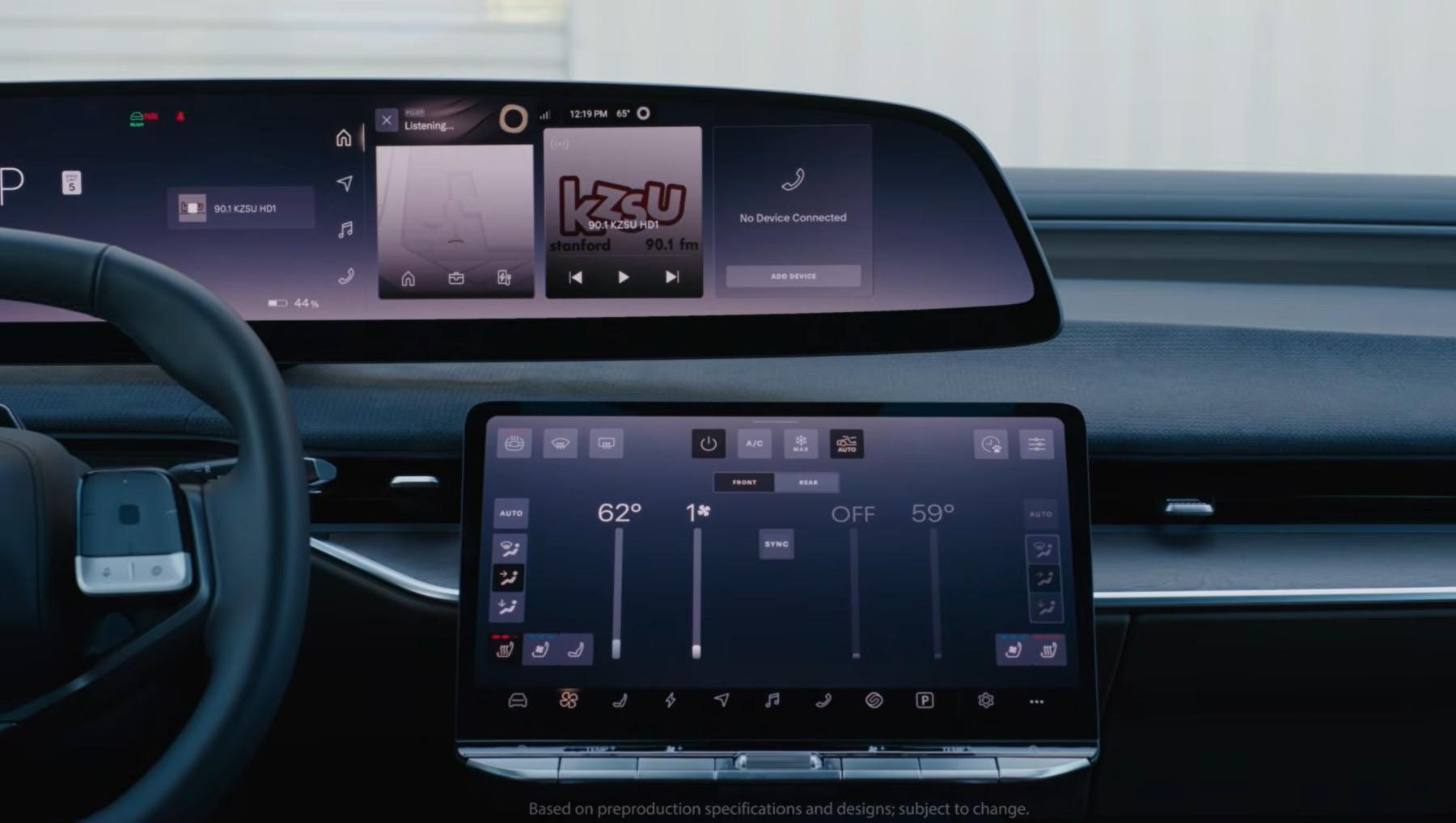
Lucid has recently unveiled the Cosmos, a five-seat electric SUV designed to capture the “midsize” market. Basically the same one BMW is attempting to carve a chunk out of with the iX3. The biggest difference on paper is the price point. While we may have to wait a few months for an entry-level iX3, Lucid is going straight in at a lower price point of $50,000. However, with the Cosmos not hitting the roads until early 2027, its entry-level trim will most likely be going head to head with BMW’s budget iX3. How far BMW decides to drop the price has yet to be seen.
The Cosmos will have less range (around 300 miles), but its battery pack is also two thirds the size of BMW’s. The Germans are rocking 108.7 kWh worth of cells, while Lucids is a far smaller 69 kWh unit. Instead of upping battery size (and expense) Lucid has instead opted to get its range through weight cutting and aerodynamic improvements. This leads to a very impressive efficiency of 4.5 miles per kWh. Like BMW, Lucid will also use 800-volt architecture.
One of the areas Lucid has saved weight is in its powertrain, with the company’s new “Atlas” motor weighing 23% less than its already compact predecessor. The lightness that comes with a smaller motor and smaller battery means the Cosmos can post a reported sub 3.5-second 0-60 time. Which is a lot quicker than the BMW. Lucid is also promising “best in class” cargo space. While exact figures have not been posted yet, the Cosmos allegedly has more room than a RAV4. If you count the frunk.
While BMW is beaten on speed, it might win back points in the infotainment department. Lucid’s 36-inch-wide display isn’t bad by any means, but BMW’s display is on a different level. With that being said, Lucid is including a lot of physical buttons in the Cosmos, including actual controls for both the sound and HVAC systems. Which will please an awful lot of people.
The most striking similarity between the two, and arguably the biggest battleground, is in the AI assistant category. BMW’s, when I tried it, really impressed me. I put Lucid’s to a similar test in NYC, and got similar results. Both companies have similar long-term ambitions, including giving users the ability to shop, manage their lives, and control their homes through their car’s AI assistant. BMW does have Amazon on side though, which may be an advantage in the short term.
I’m very excited about the iX3, and even more excited now it has a clear peer on the way. Hopefully I’ll be able to do a more in-depth head to head on both vehicles before the year is out. Watch this space, mid-size EVs are finally exciting.