1. Home
  2. Travel
  3. Evergreens

Are luggage covers TSA approved? What travelers should know before using one

They're trendy and protective, but do they actually pass the TSA test?

luggage carousel in an airport
Eric Prouzet / Unsplash

If you’ve ever had your suitcase come down the airport baggage carousel with a new scratch, dent, or black mark that wasn’t there before, you’re not alone. I’ve had my favorite carry-on come back looking like it went through a war zone, which is when I started considering luggage covers. But if you’re planning to use one, you might wonder: Are luggage covers TSA-approved?

The short answer is yes, luggage covers are TSA-approved, but there are a few things you should know before wrapping your suitcase up like a Christmas present.

Recommended Videos

What are luggage covers, anyway?

Luggage in the trunk of a car
Swansway Motor Group / Unsplash

Luggage covers are stretchy or hard-shell protectors that slip over your suitcase to keep it from getting scuffed, dirty, or tampered with. Most are made from materials like polyester, spandex, or PVC, and they come in everything from clear cases to bold, colorful designs (handy when you’re trying to spot your bag in a sea of black luggage).

Besides protection, they can also act as a theft deterrent since they add another layer that someone would have to remove to access your bag.

TSA and luggage covers: What to keep in mind

Overhead sign showing security check point lanes designated for first class and TSA Precheck passengers.
RYO Alexandre / Shutterstock

The TSA doesn’t have a specific rule banning luggage covers. However, they do require that checked bags be accessible for inspection. That’s where things can get a little tricky.

Here’s the thing – if TSA needs to inspect your bag and can’t easily remove the luggage cover, they have the authority to cut it off. So, if you’re using a cover, make sure:

  • It’s easy to remove and put back on
  • It doesn’t require a lock or zip tie to stay in place
  • You’re okay with the chance it might be removed or damaged during inspection

Most spandex-style or zippered covers that slip on and off quickly won’t be a problem. TSA agents are typically able to slide these off without issue if your bag is flagged.

What about shrink-wrapping your luggage?

Airport security agent searching a female passenger's carry-on bag with a dog nearby
CDC / Unsplash

Some international airports offer shrink-wrap services that tightly wrap your suitcase in plastic. While this is common overseas, especially in parts of Europe, it may not be the best for U.S. travelers. If your bag is selected for inspection, they’ll have to slice through all that plastic, and they’re not going to rewrap it afterward. 

Is it worth using a luggage cover?

Man carrying luggage in both hands
Kit / Unsplash

If you’re checking a bag and want to keep it clean and scratch-free, a luggage cover can be a smart investment. Just make sure it’s removable and doesn’t block access to your zippers or handles. Plus, if you pick a brightly colored or custom design, you’ll spend less time squinting at every black bag at baggage claim.

Tips for traveling with a luggage cover

  • Choose one with a zipper or Velcro closure for easy removal
  • Avoid covers with locks or ties that slow down TSA access
  • Label your suitcase underneath the cover, just in case it gets removed
  • Stick to soft, stretchy fabric covers for the best TSA compatibility

The bottom line: Are luggage covers TSA-approved?

Travelers and luggage
Allen Sheffield

So, are luggage covers TSA-approved? According to the TSA, yes. If you can easily slip the cover on and off, you’re good to go. Just remember that if your bag is flagged and the cover’s in the way, TSA has every right to remove it by any means necessary.

For most travelers, a removable fabric cover is a great way to keep your luggage protected while still complying with airport security. Just don’t get too attached to it, because if TSA needs in, they’re getting in.

Kelly is a writer who loves good books, baking homemade bread, playing the piano, and spending time with her family. Read Full Bio
Why Hyatt Regency Lost Pines belongs on your Austin itinerary
Architecture, Building, Campus

Austin has a way of filling every hour. Breakfast tacos lead to a brewery, which leads to Sixth Street, which leads to you wondering at 1 a.m. why your feet hurt. So when my best friend and I planned a quick getaway, we did things a little backward: we started with two nights of doing gloriously little at Hyatt Regency Lost Pines Resort & Spa, then headed into the city.

Best decision of the trip.

Read more
Dale Brisby ate my steak: Ranching like a Modern Cowboy
Car, Transportation, Vehicle

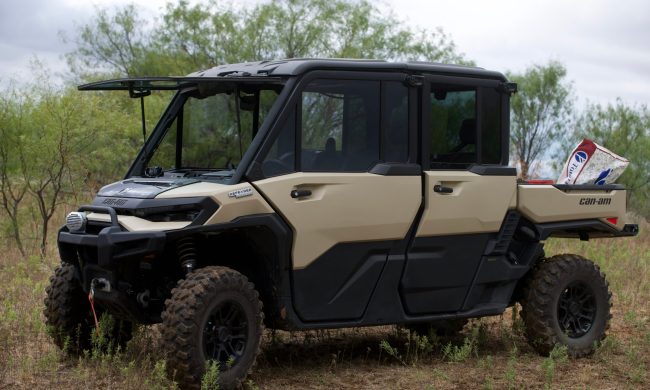
Ranching is a whole lifestyle with its own culture, fashion, and quirks, and it’s the kind of life that’s hard to acclimate to if you haven’t grown up with it. That said, the modern cowboy is incredibly fascinating to me, and it was a real treat to meet the greatest cowboy in the world himself, Dale Brisby, to pick his brain on what life is like on the ranch. 

Representatives from Can-Am invited us all out to dinner, and I was immediately struck by how authentic Dale Brisby was. He shared so much about ranch life and rodeo that it felt like drinking from a firehose. Learning from him brought me up to speed, just in time for the PBR Rattler Days event. 

Read more
This hotel made me forget time: My experience staying at the Ritz-Carlton, Aruba
Architecture, Building, Hotel

Entering the Ritz-Carlton, Aruba feels like stepping through a portal where time simply stops. I was immediately drawn to the turquoise sea, which cast a spell of calm. Driftwood and industrial lighting hang overhead, and even the elevators reinforce the serenity: fast and whisper-quiet, you barely feel them move. But I was particularly impressed with the staff and their attention to detail, so much so that I wasn’t surprised at all when I learned that the resort has just earned a coveted fourth star from Forbes Travel Guide for 2027. 

We visited in early October, which turned out to be the perfect time to dodge the crowds. Aruba’s near-constant sunshine and position outside the main hurricane belt make it a strong destination year-round, but the best time to visit depends on what you’re after. Peak season from mid-December through mid-April brings ideal dry weather and higher crowds, while shoulder months like May and June or the quieter stretch into early fall deliver the same balmy conditions with softer rates and a more unhurried pace. The hotel wasn’t crowded at all, so we were able to enjoy all the amenities in relative privacy. Here was my overall impression of all the activities and amenities at the hotel. 

Read more