Picture A5 wagyu, and the most common image is intensely marbled beef that’s almost white compared to the deep red of supermarket beef. But in Japan, wagyu is butchered in countless ways, with some of the most highly prized cuts being the leaner ones. Japanese butchery specializes in breaking down beef primals into smaller, more specific cuts, producing unique cuts perfect for grilling or shabu-shabu. This focus on smaller, more individual cuts is designed to hyper-focus the palate on the flavor and texture of wagyu.
One Japanese yakiniku restaurant, Yakiniku Great, has centered its menu on these leaner cuts, known as akami. At Yakiniku Great NYC, the focus is on the lesser-known cuts of lean wagyu — misuji (part of the shoulder blade) or the dai-sankaku (lower inner thigh). Originally from Tochigi, Japan, Yakiniku Great has locations throughout Asia and recently opened its first U.S. location in New York City in June 2026. I was able to try their menu firsthand — a tasting experience both different and familiar.
Why leaner cuts?
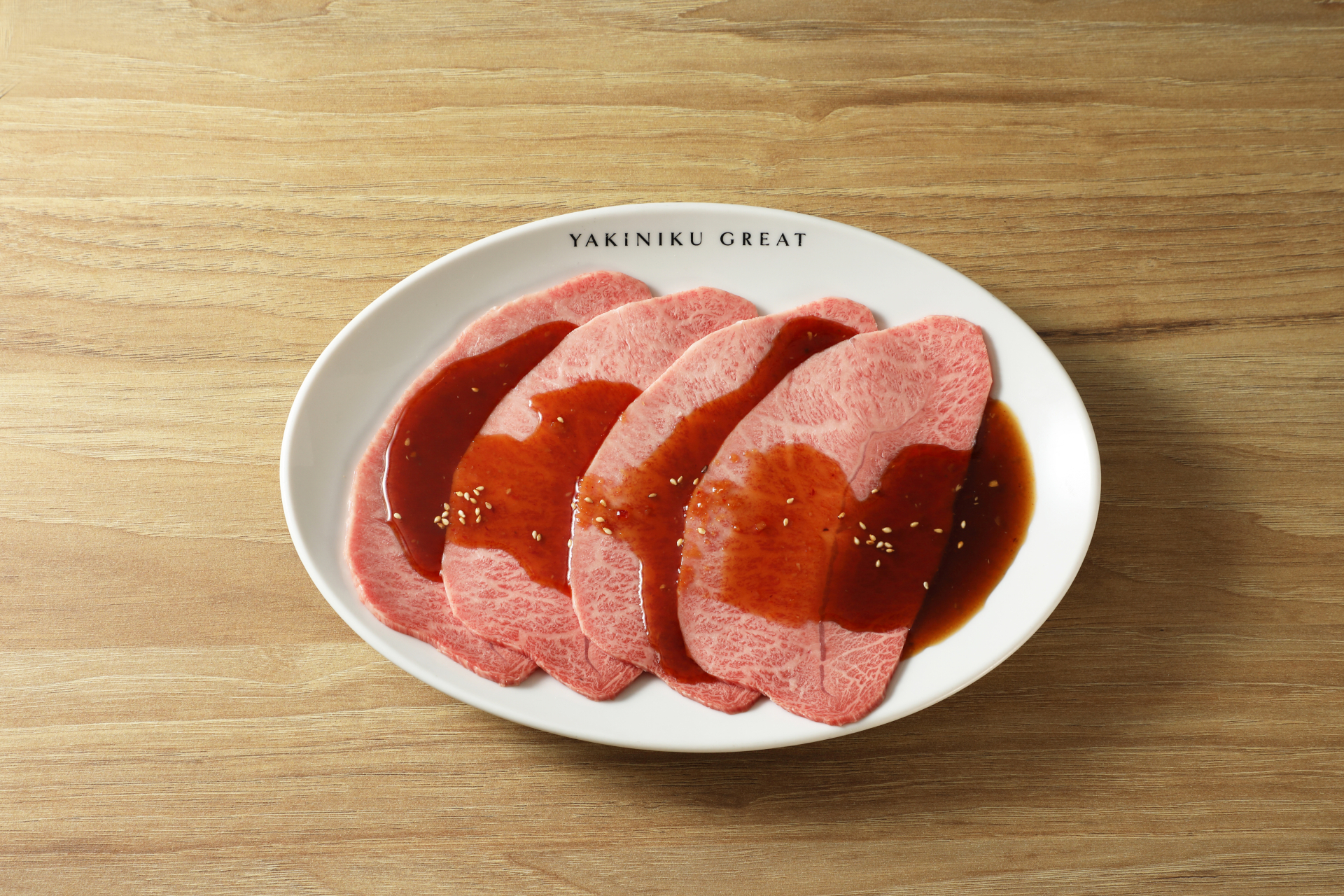
One common critique, specifically of A5 wagyu, is that the abundance of marbling, while tender, removes much of the natural beef flavor. At Yakiniku Great, the restaurant avoids the typical cuts, instead choosing to purchase larger sections of the beef shoulder and breaking it down. “Within that one section, we discovered many different lean cuts, each with its own muscle structure, texture, and degree of marbling,” explains Chef and Founder Shoji Tsugawa. “At the time, many people were already aware of the beauty of richly marbled wagyu, but few restaurants were properly showcasing the quality and flavor of Japanese wagyu’s leaner cuts.”
Yakiniku Great uses Japanese Black Wagyu (Kuroge Wagyu) for its menu. Most of the cuts of wagyu at Yakiniku Great are graded BMS (Beef Marbling Standard) 10 to 11 out of a maximum of 12, combining a high level of marbling while not overshadowing the meat flavor. It’s also key to remember that this level of wagyu will naturally be fattier and softer when compared to most commercial American cattle. A comparable cut of beef shoulder from a standard American cattle would generally be too tough to eat grilled quickly. The wagyu is also not dry-aged, a common practice in American steakhouses or beef-centric New York restaurants. Instead, Chef Tsugawa believes that while dry-aging has merits, in the context of Yakiniku Great, the focus should be on the natural flavor of the beef at peak freshness. This also isn’t the type of yakiniku restaurant where the diner grills their own meat. Since akami is delicate, Chef Tsugawa has trained the staff to cook every cut on the menu for diners.
Trying the Yakiniku Great NYC menu

While diners can order à la carte at Yakiniku Great, I recommend choosing one of the two omakase tasting options — The 6 ($130) or The 8 ($175). The 6 has fewer cuts and is better for someone seeking a lighter meal, but my recommendation would be The 8, which features the eight signature cuts of the menu. One thing to note is that the NYC menu does differ from the Asian locations. Because yakiniku stems from the Korean diaspora in Japan, kimchi is a common component at yakiniku restaurants in Japan. “For New York, however, we decided that our mission would be to present yakiniku as a distinctly Japanese dining experience, so we really focused on being a Japanese restaurant,” states Chef Tsugawa. “The menu was therefore developed around Japanese flavors, Japanese culinary techniques, and sensibilities, rather than simply recreating our existing restaurants in Asia.”
I, of course, went with The 8, which, according to Chef Tsugawa, is the more popular of the omakase options among diners. There is an option to add a supplemental $70 Uni-Chateaubriand, which I did not get because I wanted to focus on the core wagyu selections. The various cuts are grilled table-side and served with a curated seasoning, including a sukiyaki course towards the end, served with grilled Japanese negi (long green onion) and an egg yolk. New York, for whatever reason, lacks quality options for sukiyaki, so the course was a welcome and authentic taste of one of the more popular ways to enjoy Japanese beef cooking.
Despite the eight courses, I did not feel overly greasy or heavy. My previous experience consuming several courses of wagyu, particularly A5 grading or similar, has given me palate fatigue. For my personal tastes, while I enjoy A5, the overwhelming fattiness can eventually feel as if one is eating butter rather than beef. Because the cuts featured at Yakiniku Great are leaner, I found the beef flavor more pronounced, as well as less heavy. And while some of the cuts aren’t as tender as an A5 ribeye, the textural contrast of the different cuts is more interesting. And if you are desiring more tenderness, you can always order the Uni-Chateaubriand supplement.